
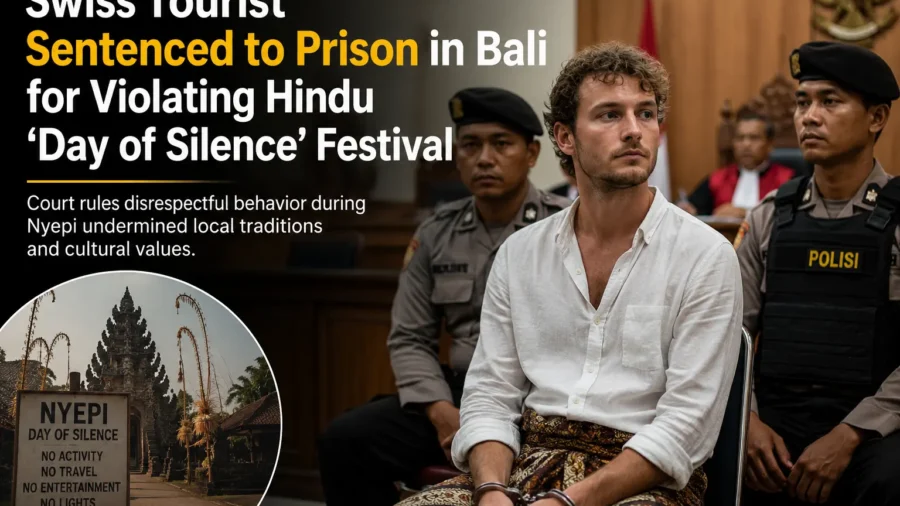
A Swiss tourist has been sentenced to prison in Bali for violating the Hindu ‘Day of Silence’ festival, also known as Nyepi, a sacred day observed by the local community. This sentencing highlights the strict enforcement of cultural and religious observances in the region and underscores the importance of respecting local customs.
Understanding the ‘Day of Silence’ Festival
The ‘Day of Silence,’ or Nyepi, is a Hindu festival celebrated annually in Bali, Indonesia. It marks the Balinese New Year and is observed with a day dedicated to silence, fasting, and meditation. During Nyepi, the entire island adheres to strict restrictions: no travel, no work, no entertainment, and minimal activity. These measures are intended to create an atmosphere of tranquility and spiritual cleansing, allowing the community to welcome the new year with renewed focus and respect for tradition.
Nyepi is deeply rooted in Balinese Hindu culture and is considered one of the most sacred days of the year. The observance affects all residents and visitors alike, with local authorities enforcing the rules to maintain the sanctity of the day. The festival’s significance extends beyond religious practice, influencing social behavior and community cohesion across the island.
Details of the Incident and Legal Proceedings
The Swiss tourist was found to have violated the strict rules of the Day of Silence by filming a video during the festival. This act of recording during a time when silence and inactivity are mandated was seen as a breach of local customs and regulations. The violation prompted legal action, culminating in a prison sentence for the tourist. The case has been widely reported by international media outlets, including The New York Times, DW.com, and PetaPixel.
Authorities in Bali treated the incident seriously, emphasizing the need to uphold the cultural and religious observances that define Nyepi. The legal proceedings reflect the medium risk level associated with such violations in Bali, as noted in recent trend analyses. This case serves as a clear example of how local laws protect cultural traditions and impose consequences for non-compliance.
Media Coverage and Public Awareness
The sentencing of the Swiss tourist has attracted significant media attention, bringing the Day of Silence festival into the international spotlight. The New York Times highlighted the sentencing, stressing the importance of respecting cultural traditions while traveling. Their coverage underscored the broader message that visitors must be mindful of local customs to avoid legal repercussions.
DW.com described the incident as an insult to the Hindu holiday, reflecting the perspective of local authorities and community members who view such violations as disrespectful. PetaPixel focused on the legal consequences of filming during the Day of Silence, providing detailed coverage of the case and its implications for tourists in Bali.
This media attention has contributed to increased awareness about the festival and the expectations placed on visitors during Nyepi. It also highlights the challenges faced by tourists unfamiliar with local customs and the importance of cultural sensitivity when traveling abroad.
Implications for Tourism and Cultural Respect
The prison sentence handed down to the Swiss tourist serves as a cautionary example for travelers worldwide. It underscores the necessity for tourists to adhere strictly to local customs, especially during significant cultural and religious events. Bali, as a popular tourist destination, has established regulations to protect its cultural heritage, and violations are met with legal consequences.
The case draws attention to the medium risk level associated with breaching cultural observances in Bali. It highlights the balance that must be maintained between tourism and respect for local traditions. Visitors are reminded that cultural sensitivity is not only a matter of etiquette but also a legal obligation during events like Nyepi.
By enforcing these rules, Bali’s authorities aim to preserve the integrity of their religious festivals and ensure that the island’s cultural identity remains respected amid growing international tourism. The incident involving the Swiss tourist reinforces the message that cultural respect is paramount and that legal systems are in place to uphold these values.
Conclusion
The sentencing of the Swiss tourist to prison for violating the Hindu ‘Day of Silence’ festival in Bali highlights the seriousness with which local authorities protect their cultural and religious observances. This incident, occurring during the festival today, serves as a reminder to travelers worldwide about the importance of respecting and honoring the traditions of the places they visit.
As Bali continues to welcome visitors from around the globe, this case emphasizes the need for cultural awareness and compliance with local customs. The Day of Silence festival remains a sacred and solemn occasion, and adherence to its rules is essential for maintaining the harmony and spiritual significance that define this unique Hindu celebration.