
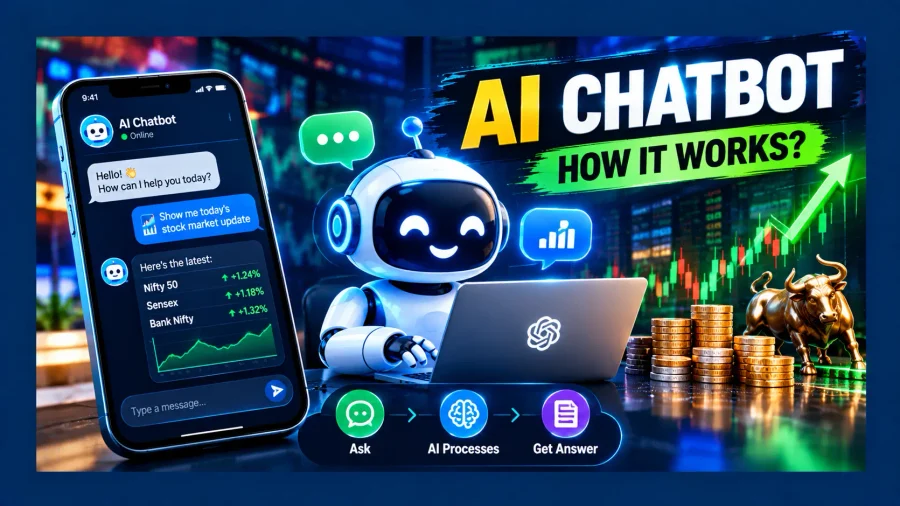

What is an AI chatbot is a question that’s become almost unavoidable over the past few years, given how quickly these tools have moved from niche customer-service widgets into something millions of people now use daily for everything from drafting emails to studying for exams. At its core, an AI chatbot is a software program designed to simulate human-like conversation, using artificial intelligence to understand what someone is asking and generate a relevant, coherent response in return.
AI chatbot technology has evolved dramatically from its earlier, more rigid form. Older chatbots relied on scripted rules and predefined decision trees, only able to respond to a narrow set of anticipated questions. Modern AI chatbots, by contrast, are built on large language models trained on enormous volumes of text, allowing them to understand context, follow nuanced conversation, and generate original responses rather than simply pulling from a fixed script.
How Does an AI Chatbot Work: The Basics Explained
How does an AI chatbot work comes down to a few core technical components working together in sequence. When you type a message, the chatbot first processes your input through natural language processing (NLP), breaking down your words and sentence structure to understand intent and meaning. It then draws on a machine learning model — typically a large language model trained on massive datasets of text — to predict the most contextually appropriate response, generating that reply word by word based on statistical patterns learned during training.
This entire process happens in a matter of seconds, even though it involves the model considering an enormous number of possible word combinations before settling on the response it ultimately delivers. The result feels conversational and natural specifically because the underlying model has learned the patterns of genuine human language from vast amounts of real text during its training process.
How an AI Chatbot Processes a Message: Step by Step
| Stage | What Happens |
|---|---|
| Input Received | User types or speaks a message |
| Natural Language Processing | The chatbot analyses grammar, intent, and context |
| Pattern Matching / Prediction | The AI model predicts the most relevant response based on training |
| Response Generation | The chatbot constructs a coherent, original reply |
| Output Delivered | The response is displayed or spoken back to the user |
AI Chatbot Technology: What’s Actually Under the Hood
AI chatbot technology today is largely built around a specific type of neural network architecture called a transformer, which allows the model to weigh the importance of different words in a sentence relative to one another, rather than processing text in a strict, rigid left-to-right sequence. This architecture is what enables modern chatbots to maintain context across a long conversation, understand references to earlier messages, and generate responses that feel coherent rather than disjointed.
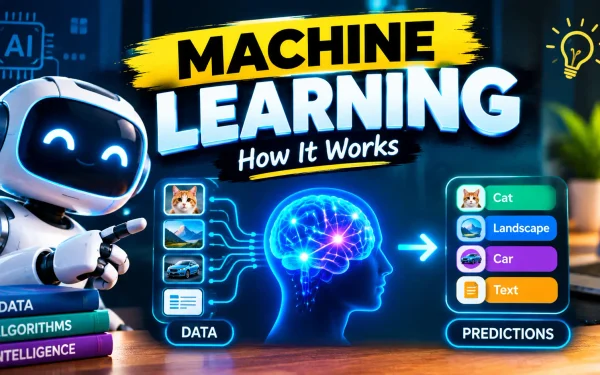
Training this kind of model involves feeding it enormous datasets — books, articles, websites, and other text sources — so it learns the statistical relationships between words, phrases, and ideas. Once trained, the model can apply everything it learned to generate fresh, original responses to prompts it has never seen before, rather than simply retrieving pre-written answers.
How Are AI Chatbots Related to Generative AI?
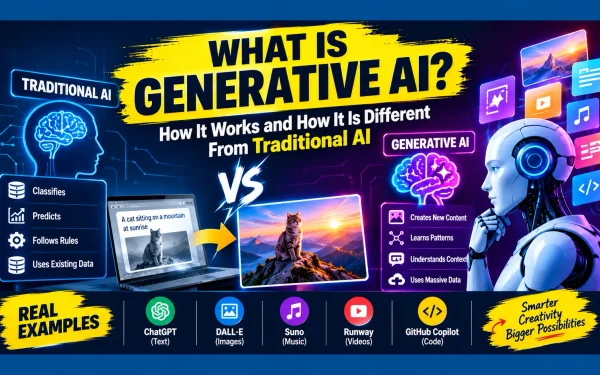
Modern AI chatbots can use generative AI to understand user prompts and create natural-language responses. While chatbots are designed to interact with users through conversation, generative AI is the technology that can help produce new text and other types of content. If you want to understand this technology in more detail, read our guide on what generative AI is, how it works and how it differs from traditional AI.
Is ChatGPT an AI Chatbot: Clearing Up a Common Question
Is ChatGPT an AI chatbot is a question with a clear, simple answer: yes, unambiguously. ChatGPT, developed by OpenAI, is one of the most well-known examples of an AI chatbot, built on a large language model trained to understand and generate human-like text in response to user prompts. It represents exactly the kind of modern, generative AI chatbot this entire article is describing — capable of holding open-ended conversations, answering questions, and generating original content rather than following a fixed script.
That said, ChatGPT is just one example among several major AI chatbots currently available, each built on its own underlying language model with slightly different strengths, training data, and design choices.
Well-Known AI Chatbots and What Powers Them
| Chatbot | Developer | Notable For |
|---|---|---|
| ChatGPT | OpenAI | General-purpose conversation, widely adopted |
| Claude | Anthropic | Conversational assistance with a focus on safety |
| Gemini | Integration with Google’s broader ecosystem | |
| Copilot | Microsoft | Productivity and coding assistance |
What Is an AI Chatbot Used For: Real-World Applications
What is an AI chatbot used for spans a genuinely wide range of everyday and professional applications at this point. In customer service, businesses deploy AI chatbots to handle routine inquiries, troubleshoot common issues, and provide 24/7 support without requiring a human agent to be available around the clock. In education, students and professionals use chatbots to get explanations of complex topics, practice languages, or get feedback on writing.
Beyond these, AI chatbots are increasingly used for drafting emails and documents, brainstorming ideas, summarising long articles or reports, assisting with basic coding tasks, and even providing companionship or conversational practice for people working on their communication skills. The versatility of modern chatbots is precisely why they’ve spread so quickly across such different industries and use cases.
Common Uses for AI Chatbots
| Use Case | Example Application |
|---|---|
| Customer Support | Answering FAQs, troubleshooting, order tracking |
| Education | Explaining concepts, tutoring, language practice |
| Productivity | Drafting emails, summarising documents, brainstorming |
| Coding Assistance | Writing, debugging, and explaining code |
| Personal Use | Recipe ideas, travel planning, general Q&A |
How AI Chatbots Fit Into Artificial Intelligence
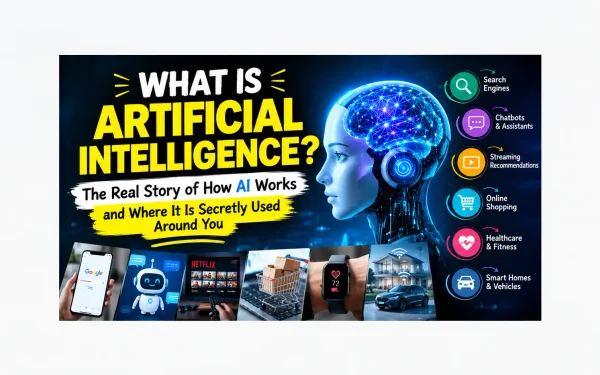
AI chatbots are one of the many applications of artificial intelligence. They can use technologies such as natural language processing, machine learning, generative AI and large language models to understand requests and generate responses. If you want to understand the broader technology behind these applications, read our guide on what is artificial intelligence , how AI works and where it is used.
What Are the Benefits of Using AI Chatbots
What are the benefits of using AI chatbots becomes clear once you consider how these tools change the speed and accessibility of getting information or assistance. Chatbots are available around the clock, meaning users aren’t limited by business hours or time zones when they need a quick answer or help drafting something. They can also handle a large volume of simultaneous conversations, something that would require significant human staffing to replicate at scale.
Beyond availability, AI chatbots offer genuine efficiency gains, cutting down the time needed to research information, draft content, or troubleshoot a problem from what might take minutes or hours down to seconds. For businesses specifically, this often translates into meaningful cost savings on customer support operations, while for individual users, it means faster access to explanations, ideas, and assistance across an enormous range of topics.
Key Benefits of AI Chatbots
| Benefit | Why It Matters |
|---|---|
| 24/7 Availability | No dependency on business hours or staff availability |
| Instant Responses | Answers delivered in seconds rather than waiting for a human |
| Scalability | Can handle many conversations simultaneously |
| Cost Efficiency | Reduces the need for large support teams for routine queries |
| Broad Knowledge Access | Can address an extremely wide range of topics |
AI Chatbot Limitations: What These Tools Still Get Wrong
AI chatbot limitations are worth understanding clearly, since these tools are genuinely powerful but far from infallible. AI chatbots can occasionally generate incorrect or fabricated information, a phenomenon often called “hallucination,” where the model produces a confident-sounding but factually wrong response. They also lack true understanding or consciousness — despite feeling conversational, a chatbot is fundamentally predicting statistically likely text based on patterns, not reasoning about the world the way a human does.
Additionally, chatbots trained on data up to a certain point in time may not have knowledge of very recent events unless specifically connected to real-time information sources. For any high-stakes decision — medical, legal, financial, or otherwise — chatbot output should be treated as a helpful starting point rather than a definitive, verified answer.
What Is an AI Chatbot With No Restrictions: Understanding This Search
What is an AI chatbot with no restrictions is a search phrase that typically refers to chatbots marketed as having minimal or no content moderation, safety guidelines, or usage restrictions compared to mainstream tools like ChatGPT or Claude. It’s worth understanding why reputable AI companies build safety guardrails into their chatbots in the first place: these restrictions exist specifically to prevent the generation of harmful content, protect user safety, avoid facilitating illegal activity, and reduce the spread of misinformation.
Chatbots marketed as having “no restrictions” often carry genuine risks, including a higher likelihood of producing harmful, inaccurate, or inappropriate content, and in many cases, significantly weaker privacy and data-handling practices than established, reputable AI providers. For everyday use, reliable information, and genuine safety, mainstream AI chatbots from established companies remain a considerably more trustworthy choice than unrestricted alternatives.
Natural Language Processing Chatbot: The Science of Understanding Language
Natural language processing chatbot capability is the foundational technology that allows these tools to understand human language in the first place, rather than requiring users to type in rigid commands or specific keywords. NLP involves breaking down text into components the model can analyse — identifying grammar structure, word meaning, sentiment, and intent — before the chatbot can generate any kind of relevant response.
This is precisely what separates modern AI chatbots from older, rule-based systems. Rather than matching your message against a list of predefined trigger phrases, an NLP-powered chatbot genuinely processes the meaning and context of what you’ve written, which is why you can phrase the same question in several different ways and still get a coherent, relevant answer each time.
AI Chatbot Examples: Seeing the Range of What’s Available
AI chatbot examples today extend well beyond the handful of major names most people immediately think of. Beyond general-purpose assistants like ChatGPT, Claude, and Gemini, there are specialised chatbots built for specific industries — customer service bots embedded directly into e-commerce websites, banking chatbots that help with account queries, healthcare chatbots that provide general medical information, and educational chatbots designed specifically for tutoring and skill-building.
This range illustrates an important point: “AI chatbot” isn’t a single, uniform category of product, but a broad umbrella covering everything from simple, narrowly-focused customer service tools to sophisticated, general-purpose conversational assistants capable of handling an enormous range of tasks and topics.
Frequently Asked Questions About AI Chatbots
1. What is an AI chatbot in simple terms?
An AI chatbot is a software program that uses artificial intelligence to understand human language and generate relevant, conversational responses to user questions or messages.
2. How does an AI chatbot actually work?
It processes user input through natural language processing to understand intent, then uses a trained machine learning model to generate a coherent, contextually appropriate response.
3. Is ChatGPT an AI chatbot?
Yes, ChatGPT is one of the most widely known examples of a modern AI chatbot, built on a large language model developed by OpenAI.
4. What is an AI chatbot used for?
AI chatbots are used for customer support, education, drafting content, coding assistance, brainstorming, and general question-answering across countless topics.
5. What are the main benefits of using AI chatbots?
Key benefits include 24/7 availability, instant responses, the ability to handle multiple conversations at once, and significant time and cost savings.
6. What are the limitations of AI chatbots?
AI chatbots can occasionally generate incorrect information, lack true understanding of context beyond pattern recognition, and may not have knowledge of very recent events.
7. What does “AI chatbot with no restrictions” actually mean?
It typically refers to chatbots with minimal safety guardrails or content moderation, which often carry higher risks of producing harmful or inaccurate content compared to mainstream, reputable AI tools.
8. What is natural language processing in a chatbot?
It’s the technology that allows a chatbot to understand grammar, meaning, and intent in human language, enabling it to respond appropriately regardless of how a question is phrased.
9. Are all AI chatbots the same?
No, AI chatbots range from narrowly-focused tools built for specific tasks like customer service to general-purpose assistants capable of handling a vast range of topics and requests.
10. Can AI chatbots replace human customer service entirely?
Not entirely; while they handle routine queries efficiently, complex or sensitive issues often still require human judgment and empathy that current AI chatbots cannot fully replicate.

1 Comment