
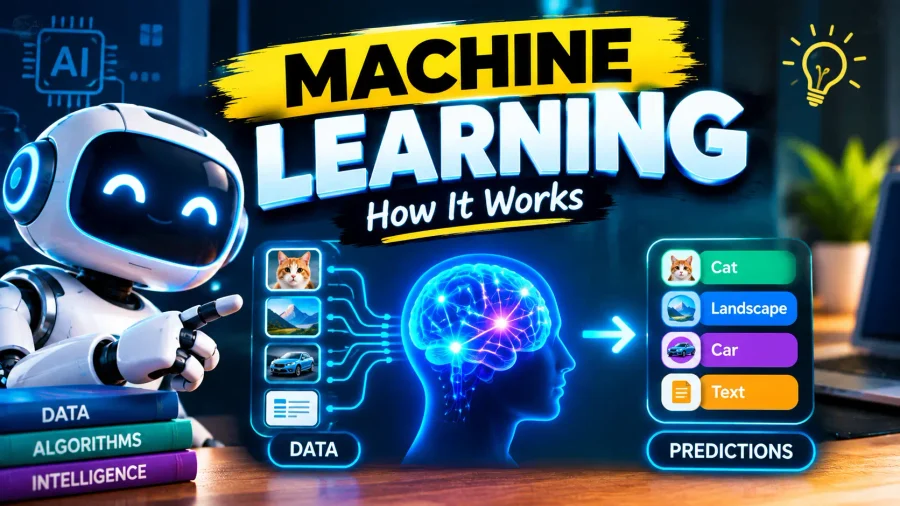

What is Machine Learning is one of those questions that sounds simple on the surface but touches almost everything you interact with online, often without you realising it. In the most basic terms, Machine Learning, or ML, is a branch of artificial intelligence that allows computer systems to learn from data and improve their performance on a task over time, without being explicitly programmed with rigid, step-by-step instructions for every single scenario.
Machine Learning definition discussions almost always come back to this core idea: instead of a human writing exact rules for every possible situation, an ML system is fed large amounts of data and learns the underlying patterns itself. Once trained, it can apply those learned patterns to new, unseen data — recognising a face in a photo it’s never seen before, recommending a movie based on your viewing habits, or flagging a suspicious transaction based on patterns learned from millions of previous ones.
What Is Machine Learning in Computer Science
What is Machine Learning in computer science terms refers to a specific subfield of artificial intelligence focused on building algorithms and statistical models that enable computers to perform tasks by learning from data rather than following explicitly coded instructions. Traditional computer programs work through hardcoded logic — if this condition is true, do that specific action. Machine Learning flips that approach: instead of a programmer writing out every rule, the system is given examples and learns the underlying relationships on its own.
This distinction is foundational to understanding why ML has become so powerful for tasks that are genuinely difficult to describe with fixed rules — recognising handwriting, understanding spoken language, or predicting which products a customer is likely to buy next are all problems where writing exhaustive manual rules simply isn’t practical.
Traditional Programming vs Machine Learning
| Aspect | Traditional Programming | Machine Learning |
|---|---|---|
| Approach | Explicit, hardcoded rules | Learns patterns from data |
| Best Suited For | Well-defined, rule-based tasks | Complex, pattern-based tasks |
| Adaptability | Requires manual rule updates | Improves automatically with more data |
| Example | Calculator following fixed formulas | Spam filter learning what spam looks like |
Machine Learning Definition and Examples: Seeing the Concept in Action
Machine Learning definition and examples become far easier to grasp once you connect the concept to tools you likely already use daily. Email spam filters, product recommendations on shopping websites, voice assistants that understand spoken commands, fraud detection systems used by banks, and the personalised feed you see on social media are all powered by Machine Learning models working quietly in the background.
Each of these systems was trained on large datasets — millions of past emails labelled as spam or not spam, millions of past purchases and browsing patterns, thousands of hours of transcribed speech — allowing the underlying model to learn statistical patterns that it then applies to new situations it encounters in real time.
Common Machine Learning Examples in Everyday Life
| Application | How Machine Learning Is Used |
|---|---|
| Email Spam Filters | Learns patterns that distinguish spam from legitimate email |
| Product Recommendations | Predicts what you’re likely to buy based on past behaviour |
| Voice Assistants | Understands and transcribes spoken language |
| Fraud Detection | Flags unusual transaction patterns in real time |
| Social Media Feeds | Ranks and personalises content based on engagement patterns |
Types of Machine Learning: The Three Core Categories
Types of Machine Learning generally fall into three broad categories, each suited to different kinds of problems depending on what data is available and what the system is being trained to do. Supervised learning trains a model on labelled data, where both the input and the correct output are known in advance, allowing the model to learn the relationship between them. Unsupervised learning, by contrast, works with unlabeled data, where the model looks for hidden patterns or groupings on its own without being told what the “correct” answer looks like.
Reinforcement learning takes a different approach entirely, training a model through trial and error, where the system receives rewards or penalties based on the actions it takes, gradually learning which behaviours lead to better outcomes over repeated attempts.
Types of Machine Learning: Quick Comparison
| Type | How It Works | Example Use Case |
|---|---|---|
| Supervised Learning | Trained on labelled input-output pairs | Predicting house prices from historical sales data |
| Unsupervised Learning | Finds patterns in unlabeled data | Grouping customers into segments based on behaviour |
| Reinforcement Learning | Learns through trial, error, and reward | Training an AI to play a game or optimise a process |
What Is Machine Learning in AI: Understanding the Relationship
What is Machine Learning in AI comes down to understanding that ML isn’t a separate, competing technology from artificial intelligence — it’s actually one of the primary methods used to build AI systems. Artificial Intelligence is the broader goal: creating systems capable of performing tasks that typically require human intelligence. Machine Learning is one of the main approaches used to achieve that goal, specifically through learning from data rather than explicit programming.
Not all AI is built using Machine Learning — some earlier AI systems relied on hardcoded rule-based logic instead — but the vast majority of modern AI breakthroughs, from image recognition to language models, are built fundamentally on Machine Learning techniques.
What Is Artificial Intelligence? How AI Works and Where It Is Used
Machine learning is one of the key technologies behind modern artificial intelligence. While AI is a broader field focused on creating systems that can perform tasks that normally require human intelligence, machine learning allows computers to learn from data and improve their performance over time. To understand the bigger picture, you can also read our guide on what artificial intelligence is, how AI works and where it is used.
Machine Learning vs AI: Clearing Up the Confusion
Machine Learning vs AI comparisons trip up a lot of people because the two terms are often used interchangeably in casual conversation, even though they technically describe different things. AI is the umbrella term covering any system designed to mimic human-like intelligence, while Machine Learning is a specific subset of AI focused on learning from data. Every Machine Learning system is a form of AI, but not every AI system relies on Machine Learning.
Machine Learning vs AI: Key Differences
| Aspect | Artificial Intelligence (AI) | Machine Learning (ML) |
|---|---|---|
| Scope | Broad field covering all human-like intelligence tasks | Specific subset focused on learning from data |
| Approach | Can include rule-based systems or learning-based systems | Always involves learning patterns from data |
| Relationship | The overarching goal | One of the main methods used to achieve AI |
| Example | A chess program using either fixed rules or ML | A recommendation engine trained on user data |
Machine Learning and Deep Learning: How They Connect
Machine Learning and Deep Learning are related but distinct concepts, with Deep Learning actually being a specialised subset of Machine Learning rather than a separate field entirely. Deep Learning specifically uses neural networks with many layers — hence “deep” — to process data and learn increasingly complex patterns, making it particularly effective for tasks like image recognition, natural language processing, and speech recognition, where the relationships within the data are highly complex.
Traditional Machine Learning techniques, by contrast, often work well with smaller datasets and simpler pattern structures, requiring less computational power but sometimes struggling with the kind of nuanced, layered pattern recognition that Deep Learning handles more naturally.
Machine Learning vs Deep Learning: Quick Comparison
| Aspect | Traditional Machine Learning | Deep Learning |
|---|---|---|
| Data Requirements | Works well with smaller datasets | Typically needs large datasets |
| Computational Needs | Generally lower | Significantly higher, often requiring GPUs |
| Best Suited For | Simpler, structured pattern recognition | Complex tasks like image and speech recognition |
| Relationship to ML | Is Machine Learning | A specialised subset of Machine Learning |
Is ChatGPT Machine Learning: Answering a Common Question
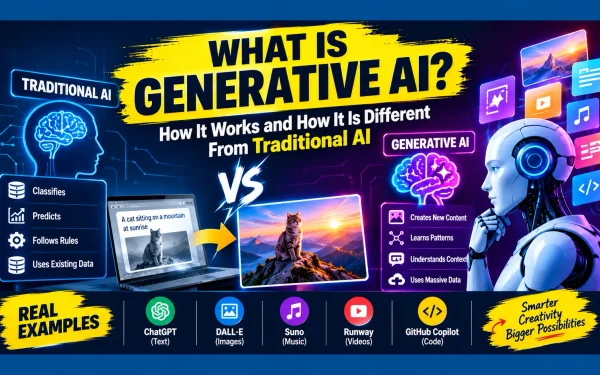
Is ChatGPT Machine Learning has a clear answer: yes, ChatGPT is built on Machine Learning, specifically a form of Deep Learning using a large language model trained on vast amounts of text data. It falls under the broader umbrella of generative AI, but the underlying technology that allows it to understand and generate human-like text is fundamentally a Machine Learning system, trained through the same core principles of learning patterns from data that apply across the ML field more broadly.
What Is an AI Chatbot and How Does It Work?
Machine learning is also widely used in modern AI chatbots. These systems can learn patterns from large amounts of data and use trained models to understand questions and generate relevant responses. If you want to understand how these conversational systems work, read our guide on what an AI chatbot is and how it works.
Is ML Full of Coding: What Learning Machine Learning Actually Involves
Is ML full of coding is a genuinely common concern for people considering this field, and the honest answer is: yes, coding is a significant part of it, though perhaps not to the extent some people assume. Python is by far the most widely used programming language in Machine Learning, thanks to its readability and the extensive libraries available specifically for ML work, such as TensorFlow, PyTorch, and scikit-learn.
That said, modern ML work increasingly involves working with pre-built frameworks and tools rather than writing algorithms entirely from scratch, meaning a strong grasp of coding fundamentals matters more than being able to build every component manually. Alongside coding, a solid understanding of statistics, linear algebra, and probability is equally important for genuinely understanding how and why ML models behave the way they do.
Is ML a High Paying Job: What the Career Path Looks Like
Is ML a high paying job is a question worth answering honestly rather than with inflated expectations. Machine Learning roles are generally among the better-compensated positions within the broader technology sector, reflecting the specialised skill set and strong demand for this expertise across industries. That said, actual compensation varies considerably based on experience level, location, company size, and the specific role — an entry-level ML position typically pays less than roles requiring several years of specialised experience.
What Is AI ML Salary: A Realistic Expectation
What is AI ML salary ranges depend heavily on your specific country, city, years of experience, and the company you’re working for, making it genuinely difficult to state a single universal figure with confidence. Generally speaking, ML and AI roles do tend to command a premium compared to many other technology positions, given the specialised nature of the skill set and consistently strong industry demand, but treating any specific number found online as guaranteed is unrealistic, since compensation varies so significantly by region and experience level.
For the most accurate, current figures relevant to your specific situation, checking region-specific job platforms and salary aggregators directly tends to be far more reliable than a single generic figure.
Artificial Intelligence: Revolutionizing Medical Diagnostics and Beyond
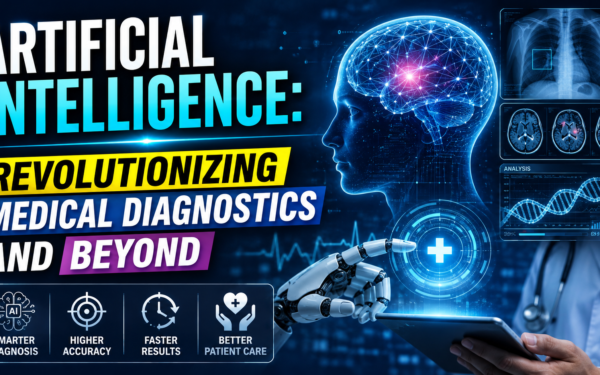
Healthcare is another important area where machine learning can be applied. ML systems can analyse large amounts of medical data, identify patterns and assist researchers and healthcare professionals in areas such as medical image analysis and disease detection. For a broader look at how AI is being used in healthcare, see our guide on artificial intelligence in medical diagnostics.
Can I Learn ML in 3 Months: Setting Realistic Expectations
Can I learn ML in 3 months depends heavily on what “learn” actually means to you. In three months of focused, consistent study, it’s genuinely possible to grasp the fundamentals — basic Python for ML, core concepts like supervised and unsupervised learning, and building a few simple models using existing libraries. However, developing the deeper statistical intuition, hands-on project experience, and practical problem-solving skills that most employers actually look for typically takes considerably longer than three months.
Think of three months as a solid foundation-building period rather than a complete transformation into a job-ready ML practitioner — it’s an achievable and worthwhile starting point, but genuine proficiency generally comes from sustained practice well beyond that initial window.
Is AI Possible Without ML: A Nuanced Answer
Is AI possible without ML — yes, technically, though it’s increasingly rare in modern practice. Early AI systems, going back decades, relied on rule-based, symbolic approaches where human experts hardcoded logic and decision trees rather than having the system learn from data. Some rule-based expert systems and basic automation tools still exist today that qualify as AI without using Machine Learning at all.
That said, the vast majority of AI systems considered cutting-edge today — from voice assistants to recommendation engines to generative AI tools — are built fundamentally on Machine Learning. Non-ML AI still exists conceptually and in some simpler applications, but it represents a shrinking share of what’s actually being built and deployed in the field right now.
Frequently Asked Questions About Machine Learning
1. What is Machine Learning in simple words?
Machine Learning is a branch of AI where computer systems learn patterns from data and improve their performance on a task over time, without being explicitly programmed for every scenario.
2. Is ChatGPT Machine Learning?
Yes, ChatGPT is built on Machine Learning, specifically using Deep Learning and a large language model trained on massive amounts of text data.
3. What is the difference between ML and AI?
AI is the broad field covering any system designed to mimic human-like intelligence, while Machine Learning is a specific subset of AI focused on learning from data rather than following fixed rules.
4. Is ML full of coding?
Yes, coding is a significant part of Machine Learning, with Python being the most widely used language, though understanding statistics and mathematics is equally important.
5. Is ML a high paying job?
Machine Learning roles are generally well-compensated within the technology sector, though actual pay varies significantly based on experience, location, and company.
6. What is AI ML salary typically like?
Salaries vary widely by region, experience level, and company, but ML and AI roles generally command a premium compared to many other technology positions due to strong demand and specialised skills.
7. Can I learn ML in 3 months?
You can learn the fundamentals in three months of focused study, but developing deeper expertise and job-ready skills typically takes longer than that.
8. Is AI possible without ML?
Yes, technically, through rule-based or symbolic AI systems, though the majority of modern, advanced AI applications are built using Machine Learning.
9. What are the main types of Machine Learning?
The three main types are supervised learning, unsupervised learning, and reinforcement learning, each suited to different kinds of problems and data.
10. What is the difference between Machine Learning and Deep Learning?
Deep Learning is a specialised subset of Machine Learning that uses multi-layered neural networks, particularly effective for complex tasks like image and speech recognition.



3 Comments