
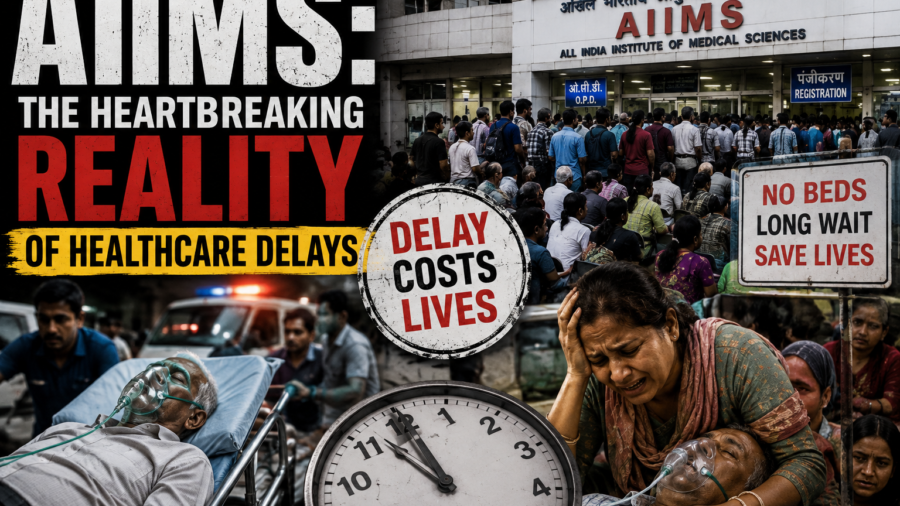
AIIMS, the renowned All India Institute of Medical Sciences, has recently found itself at the center of a heartbreaking story that underscores the critical issue of healthcare delays. The tragic death of a 15-year-old girl, who reportedly waited 12 years for heart surgery, has ignited a wave of outrage and concern regarding the efficacy of healthcare systems in India. This incident not only highlights the personal tragedy faced by families but also points to systemic issues that plague the healthcare sector, particularly in high-demand institutions like AIIMS.
Reports from various sources detail how the young girl, referred to in some articles as Tanvi, succumbed to her health complications after years of waiting for a necessary operation. Her father, devastated by the loss, has been vocal about the lack of timely intervention that could have potentially saved his daughter’s life. This heart-wrenching situation at AIIMS reflects a broader narrative of patients who face significant delays when seeking essential medical care, raising important questions about the accessibility and efficiency of health services in India.
Deep Dive: The Incident and Its Implications
The incident involving AIIMS has been documented in multiple reports, including a detailed timeline highlighting the years of wait and the eventual outcome. According to a report by India Today, Tanvi’s case is not isolated; it represents a troubling trend wherein patients, particularly children, are left waiting for critical surgeries that can mean the difference between life and death. The story outlines a 13-year saga of medical appointments, assessments, and the agonizing wait for surgery that ultimately ended in tragedy.
In the wake of this tragic event, the AIIMS administration has announced the formation of a panel to investigate the circumstances surrounding Tanvi’s death, as reported by The Times of India. This panel aims to explore the systemic issues that led to such prolonged waiting periods and to recommend changes that could prevent similar tragedies in the future. While the formation of such a panel is a step in the right direction, many are questioning whether this will lead to substantive changes or simply serve as a public relations exercise.
The healthcare crisis at AIIMS is compounded by the sheer volume of patients seeking treatment. The demand for services far exceeds the available resources, resulting in long waiting times, which can be detrimental, particularly for those requiring urgent medical attention.
Context: The Broader Healthcare Landscape
The challenges faced by patients at AIIMS are reflective of a larger healthcare crisis in India, where demand far outstrips supply. As one of the primary healthcare institutions in the country, AIIMS is often inundated with patients seeking medical attention for various ailments. The high patient-to-doctor ratio and limited resources combine to create an environment where delays in treatment become alarmingly common.
This situation is exacerbated by the fact that many patients come to AIIMS from rural areas, seeking specialized care that is unavailable in their local healthcare facilities. The influx of patients contributes to the backlog, making it increasingly difficult for healthcare providers to deliver timely and effective treatment. Furthermore, the emotional and psychological toll on families waiting for critical surgeries cannot be underestimated, as evidenced by the heart-wrenching accounts following Tanvi’s death.
Moreover, the systemic issues at AIIMS extend beyond just patient volume. Reports indicate that administrative inefficiencies and a lack of streamlined processes contribute significantly to the delays. The healthcare system needs to address these inefficiencies to ensure that patients receive timely care. This includes better allocation of resources, training for medical staff, and improved management practices.
Implications: A Call for Reform
The tragic passing of the young girl at AIIMS should serve as a wake-up call for policymakers and healthcare administrators across the country. It brings to light the urgent need for reforms in the healthcare system, particularly in enhancing the efficiency of surgical procedures and the overall management of patient care. The question looms large: how many more families must endure similar heartache before changes are made?
Healthcare reform must prioritize not only the provision of services but also the accessibility and timeliness of these services. Increasing funding for public health institutions, expanding the workforce, and implementing better management practices are just a few strategies that could lead to significant improvements. Moreover, there is a pressing need for transparent systems that keep families informed about wait times and treatment options, thereby alleviating some of the anxiety associated with medical care.
Experts have emphasized that the introduction of technology in healthcare management could play a crucial role in addressing these delays. Electronic health records, telemedicine, and patient management systems can streamline processes and improve communication between healthcare providers and patients. By adopting such technologies, institutions like AIIMS can enhance their operational efficiency and ultimately provide better care to patients.
Conclusion: A Tragic Reminder
The story of Tanvi and her tragic wait for heart surgery at AIIMS is a sobering reminder of the imperfections within the healthcare system. It highlights the need for systemic changes to ensure that no child or family faces the same fate. As India continues to grapple with healthcare challenges, the death of this young girl should not be in vain; it must galvanize action towards a more efficient and humane healthcare system.
In conclusion, as we reflect on the heart-wrenching loss of Tanvi, it is imperative that we advocate for a healthcare system that is responsive to the needs of the people it serves. The hope is that through collective efforts and sincere commitment to reform, we can prevent such tragedies from occurring in the future.
| Incident | Details |
|---|---|
| Patient Name | Tanvi |
| Age | 15 years |
| Waiting Period for Surgery | 12 years |
| Outcome | Death |
Frequently Asked Questions
What led to Tanvi’s death at AIIMS?
Tanvi died after waiting 12 years for heart surgery, highlighting significant delays in healthcare services.
What are the systemic issues at AIIMS?
AIIMS faces challenges such as high patient volume, limited resources, and long waiting times for surgeries.
Is there an investigation into Tanvi’s death?
Yes, AIIMS has formed a panel to investigate the circumstances surrounding Tanvi’s death.
How do delays in surgery impact patients?
Delays can lead to worsening health conditions, increased anxiety for families, and in tragic cases, death.
What reforms are needed in the healthcare system?
Reforms should focus on increasing funding, expanding the workforce, and improving management practices.
How can families be better informed about wait times?
Implementing transparent systems to communicate wait times and treatment options can alleviate anxiety.
What can be done to prevent similar tragedies in the future?
Advocating for a more efficient healthcare system and prioritizing patient care are crucial steps.
