
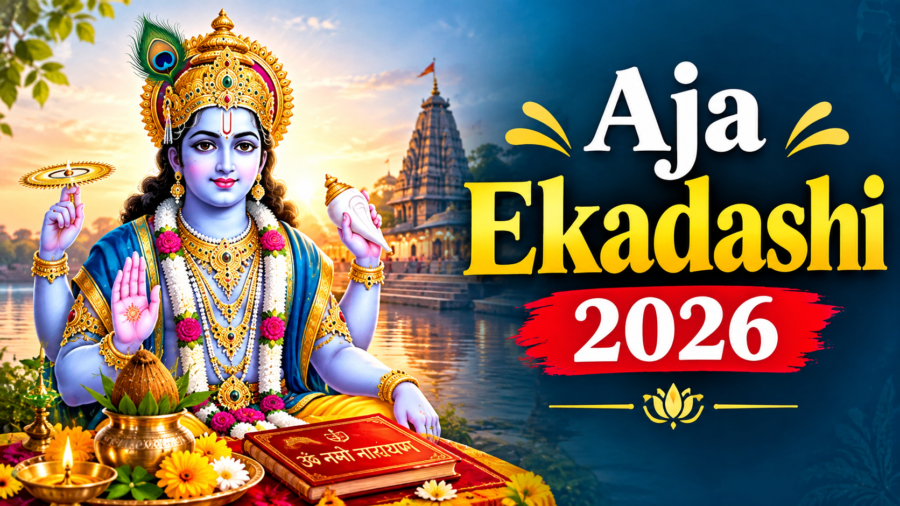

Aja Ekadashi 2026 carries one of the more emotionally powerful stories in the entire Ekadashi calendar, and it’s exactly why so many devotees make it a point to read this particular katha rather than skip straight to the puja. At the centre of it is a king who gave up his throne, his wealth, and even his own family — not because he was defeated in battle, but because he refused to break a promise. What happened to him afterward is the reason this fast is still observed with such devotion today.
Aja Ekadashi date for 2026 falls on Monday, September 7, according to Panchang calculations followed across most Hindu traditions. The Ekadashi Tithi technically begins on the evening of September 6 at around 7:29 PM and continues until roughly 5:03 PM the next day, but because the fast is determined by the Udaya Tithi — the date on which the Ekadashi prevails at sunrise — devotees observe it on September 7 rather than the previous evening.
Aja Ekadashi Date: Getting the Timing Right This Year
Aja Ekadashi date confusion is fairly common every year, mainly because the Ekadashi Tithi spans across two calendar days. This year, the tithi starts on Sunday evening and runs into Monday afternoon, which is exactly why some early calendars floated September 6 as an option before Panchang authorities settled on September 7 as the correct fasting day.
The Parana, or the ritual breaking of the fast, takes place the following morning — Tuesday, September 8 — with most Panchang sources placing the auspicious window somewhere between 6:02 AM and 8:33 AM, though this can shift slightly depending on your city’s sunrise timing.
Aja Ekadashi 2026: Key Dates and Timings
| Event | Timing |
|---|---|
| Ekadashi Tithi Begins | September 6, 2026, ~7:29 PM |
| Ekadashi Tithi Ends | September 7, 2026, ~5:03 PM |
| Vrat Observed On | Monday, September 7, 2026 |
| Parana (Fast-Breaking) Day | Tuesday, September 8, 2026 |
| Parana Muhurat | Approx. 6:02 AM – 8:33 AM |
Timings are based on North Indian Panchang calculations and may vary slightly by city — checking a local Panchang is always recommended.
Aja Ekadashi Vrat Katha: The Story of King Harishchandra
Aja Ekadashi vrat katha is inseparable from the story of King Harishchandra, one of the most well-known figures in Hindu mythology for his unshakeable commitment to truth. According to the legend, Harishchandra once ruled a prosperous, thriving kingdom, loved deeply by his subjects. But fate turned against him, and through a chain of events tied to a vow he had made, he was forced to give up his throne, his wealth, and eventually his own family, taking up work as a servant to a chandal just to survive.
Despite everything he lost, Harishchandra refused to abandon truth and righteousness — even when doing so would have made his suffering far easier to bear. It was during this period of hardship that he encountered sage Gautam, to whom he described the full weight of his misfortune. Moved by the king’s unwavering honesty, the sage advised him to observe the fast of Aja Ekadashi, falling during Krishna Paksha of the Bhadrapada month, explaining that this vrat was devoted to Lord Vishnu and had the power to dissolve even the heaviest sins when observed with genuine faith.
Harishchandra followed the sage’s guidance, observing the fast with complete devotion and worshipping Lord Vishnu according to proper ritual. According to the katha, the effects of that single fast were extraordinary — his lost kingdom, wealth, and family were all restored to him, and he eventually attained Moksha, ascending to Vaikuntha through Lord Vishnu’s grace.
Aja Ekadashi Significance: Why This Story Still Resonates
Aja Ekadashi significance goes far beyond just another fasting day on the Hindu calendar — it’s fundamentally a story about what happens when someone refuses to compromise their values, even under the most extreme pressure. Harishchandra didn’t observe the fast to escape his suffering; he observed it after enduring it all, still holding onto truth. That distinction is part of why this particular Ekadashi carries such emotional weight for devotees.
Religious belief holds that observing this vrat with sincerity helps dissolve past sins and clears obstacles that stand in the way of peace and prosperity. Some traditions even describe the merit of fasting on this day as being equal to performing a thousand Ashwamedha yajnas — a scale traditionally reserved for the sacrifices performed by emperors, which gives some sense of how significant this particular Ekadashi is considered within the broader fasting calendar.
Aja Ekadashi Importance in Hinduism: Where It Fits in the Ekadashi Calendar
Aja Ekadashi importance in Hinduism is also tied to its calendar placement — it falls in the Krishna Paksha of Bhadrapada, making it the first Ekadashi of that particular lunar month. Of the twenty-four Ekadashis observed across a full Hindu year, each carries its own distinct story and significance, but Aja Ekadashi’s association with truth, sacrifice, and redemption gives it a particularly enduring place in devotional practice, especially among those drawn to stories of moral steadfastness.
In some regional traditions, this same Ekadashi is also referred to as Annada Ekadashi, though the date, the katha, and the puja vidhi remain consistent regardless of the name used.
Aja Ekadashi Puja Vidhi: How the Ritual Is Performed
Aja Ekadashi puja vidhi follows a fairly structured routine that most devotees observe with only minor regional variations. The day typically begins early, with a bath followed by a formal sankalpa — a spoken vow to observe the fast — taken in front of the home deity. After cleaning the home and puja space, an idol or image of Lord Vishnu is placed on the altar, dressed in yellow cloth and offered yellow flowers, which are considered especially auspicious for Vishnu worship.
The ritual continues with an abhishek using Ganga water, followed by the lighting of incense and a diya, and formal worship according to tradition. Offerings typically include fruits, sweets, and other sattvic foods. Throughout the day, chanting the mantra “Om Namo Bhagavate Vasudevaya” is considered especially beneficial, and in the evening, many devotees perform Vishnu aarti or recite the Vishnu Sahasranama. Reading or listening to the Aja Ekadashi vrat katha itself is treated as an essential part of the day’s observance, believed to bring auspicious results on its own.
Aja Ekadashi Puja Vidhi: Step-by-Step
| Step | What to Do |
|---|---|
| 1. Morning Preparation | Bathe early, take the fasting sankalpa before Lord Vishnu |
| 2. Clean the Space | Clean the home and puja altar thoroughly |
| 3. Set Up the Altar | Place a Vishnu idol/image, offer yellow cloth and flowers |
| 4. Abhishek | Bathe the deity with Ganga water |
| 5. Formal Worship | Light incense and diya, offer fruits, sweets, sattvic food |
| 6. Mantra Chanting | Recite “Om Namo Bhagavate Vasudevaya” through the day |
| 7. Evening Ritual | Perform Vishnu aarti or recite Vishnu Sahasranama |
| 8. Read the Katha | Recite or listen to the Aja Ekadashi vrat katha |
| 9. Parana (Next Day) | Break the fast after Dwadashi puja within the parana window |
Aja Ekadashi Fasting Rules: What Devotees Should Know
Aja Ekadashi fasting rules follow the general pattern observed across most Ekadashi vrats, though devotees can choose the intensity that suits them. Some observe a completely waterless (Nirjala) fast, while others follow a Phalahar approach, permitting fruits, milk, and non-grain foods through the day. Rice, in particular, is traditionally avoided on Ekadashi, based on the belief tied to a Puranic story involving the demon Mura taking refuge within rice grains — though practically speaking, rice is also considered heavy and better avoided when the goal is a light, meditative fasting day.
Those who are unwell, elderly, or pregnant are generally advised not to observe a strict fast; a simple, grain-free sattvik meal alongside sincere puja and the reading of the katha is considered an acceptable alternative, since the merit of the vrat is understood to rest on devotion rather than physical hardship.
Aja Ekadashi Rituals: Charity and Closing the Fast
Aja Ekadashi rituals don’t end with the puja itself — charity, or daan, is considered an important closing element of the observance. Devotees are encouraged to donate food, clothing, or other essentials to those in need, or to Brahmins, according to their means, on either the day of the vrat or immediately after the parana. This act of giving is believed to add to the merit earned through fasting and worship.
The Parana itself must be completed within the prescribed window on Dwadashi, generally after sunrise. Continuing the fast beyond this window, or letting it spill into Trayodashi, is traditionally considered a lapse in observance, so devotees are advised to complete the parana on time according to their local Panchang.
Aja Ekadashi Benefits: What Devotees Believe This Fast Brings
Aja Ekadashi benefits, according to religious belief, extend across both spiritual and material dimensions of life. Devotees hold that sincere observance helps dissolve accumulated sins, brings peace and stability to the household, and clears obstacles standing in the way of prosperity — much like the transformation described in Harishchandra’s own story. For many, the appeal of this particular Ekadashi lies precisely in that narrative: a reminder that integrity, even when it costs everything in the short term, tends to be restored in full eventually.
Whether observed as a strict fast or a gentler sattvic version, the underlying intention remains the same across households — devotion to Lord Vishnu, reflection through the katha, and a renewed commitment to living with the same honesty that defined King Harishchandra’s own difficult journey.
What is the other name for Aja Ekadashi?
Aja Ekadashi is also known as Annada Ekadashi (or Ananda Ekadashi).
What are the dates for Ekadashis in 2026?
Aja Ekadashi: 7 September 2026 (Krishna Paksha, Bhadrapada)
What is the significance of Aja Ekadashi?
Aja Ekadashi is a sacred Hindu holy day dedicated to the worship of Lord Vishnu, believed to wash away past sins, purify the soul, and grant liberation (Moksha).
This article is based on Panchang timings and traditional accounts of the Aja Ekadashi vrat katha as reported by multiple religious and astrology sources as of early September 2026. Exact tithi and parana timings may vary slightly by city; please cross-check with your local Panchang before observing the fast.




1 Comment