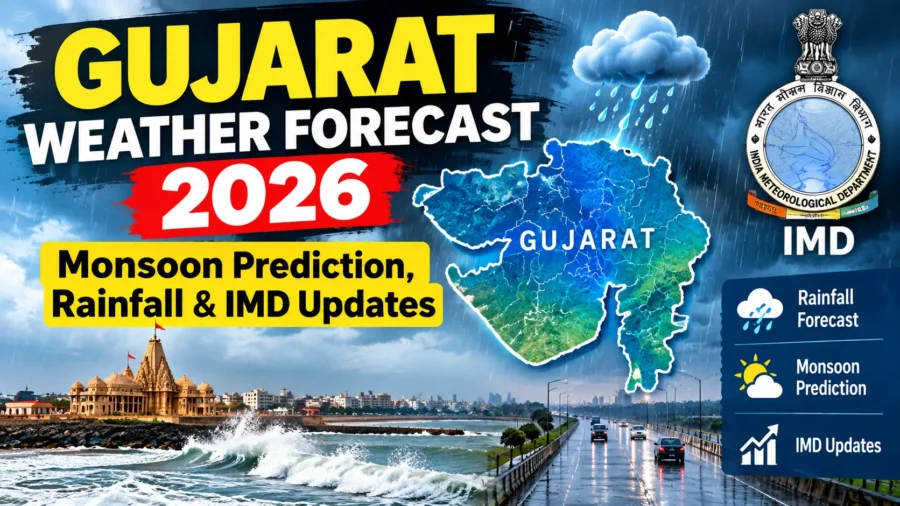

Weather forecast predictions for Gujarat have taken center stage as the India Meteorological Department (IMD) issues critical alerts affecting millions across the state. With sophisticated forecasting technology and expert meteorologists like Deepak Chudasma from BBC News Gujarati analyzing atmospheric patterns, residents now receive detailed predictions that shape agricultural decisions, urban planning, and daily activities. The current weather scenario presents a fascinating study in how regional geography—from coastal Saurashtra to arid Kutch—creates diverse microclimates requiring nuanced forecasting approaches.
Gujarat’s weather patterns don’t follow simple templates. When Surendranagar experiences strong winds lifting debris into massive dust storms, Dwarka’s coastal regions might enjoy relatively calm conditions. This geographical diversity makes meteorological work both challenging and absolutely essential. The IMD’s recent yellow alerts for 12 districts simultaneously demonstrate the sophisticated monitoring systems now in place, tracking everything from temperature gradients to moisture levels with remarkable precision.
Also Read:-
Bank Strike Tomorrow: September 11 Disruption Explained — Will Your Branch Be Open?
Aja Ekadashi 2026: The Story of a King Who Lost Everything — and Got It Back for Telling the Truth
What’s particularly striking about modern forecasting is how it’s evolved beyond simple rain-or-shine predictions. Meteorologists now analyze satellite imagery, Doppler radar data, and atmospheric pressure systems to provide district-specific forecasts. When predictions indicate light rainfall between April 19th and 22nd across various Gujarat regions, it’s not guesswork—it’s the result of analyzing multiple data streams and weather models working in concert.
Gujarat Weather Patterns: Understanding Regional Climate Variations
The state’s climate diversity stems from its unique positioning between the Arabian Sea and the Thar Desert. Coastal areas experience maritime influences while northern districts face continental weather patterns. This creates a meteorological patchwork where simultaneous weather events—heatwaves in one region, rainfall in another—aren’t unusual but rather the norm.
Recent forecasts predicting light rainfall across Gujarat’s various parts highlight this complexity. The IMD doesn’t issue blanket state-wide predictions anymore. Instead, they provide granular, district-level forecasts that account for local topography, proximity to water bodies, and historical weather data. This precision matters enormously for agriculture, construction, and transportation sectors that depend on accurate weather intelligence.
Temperature variations across Gujarat can span 10-15 degrees Celsius on the same day between different regions. Kutch might swelter under scorching heat while Dang district experiences moderate temperatures and cloud cover. Understanding these variations isn’t academic—it directly impacts energy consumption, agricultural water requirements, and public health planning. When the IMD forecasts heatwave conditions in Gujarat and Madhya Pradesh simultaneously, it reflects larger atmospheric patterns affecting central and western India.
The coastal belt presents unique forecasting challenges. Sea surface temperatures, wind directions from the Arabian Sea, and monsoon depressions all contribute to weather patterns that can shift within hours. Fishermen communities have developed remarkable weather literacy, combining traditional knowledge—reading cloud formations and ocean behavior—with modern forecasts to make life-or-death decisions about venturing offshore.
Monsoon 2026 Forecast: Will Gujarat Experience Normal Rainfall?
The burning question on every farmer’s mind revolves around monsoon 2026’s strength and distribution. Will it be weak or robust? Early indicators from meteorological departments suggest a complex picture. Climate models analyzing Pacific Ocean temperatures, Indian Ocean Dipole conditions, and jet stream patterns are being scrutinized to predict this year’s monsoon behavior.
Historical data shows Gujarat receives approximately 800-1200mm of rainfall annually, but distribution varies wildly across districts. Dang and Valsad in the southern belt receive significantly more rainfall than Kutch’s northern regions. The monsoon’s arrival date, intensity, and distribution pattern determine agricultural success for the entire year. A delayed monsoon—even by two weeks—can devastate kharif crop sowing schedules.
What makes 2026 particularly interesting is the ongoing El Niño to La Niña transition. Such transitions historically create unpredictable monsoon patterns. The IMD’s long-range forecasts, typically issued in April, will provide crucial guidance. However, farmers can’t wait that long—they’re already making preliminary decisions about crop selection based on early signals and expert meteorologist predictions.
The economic implications are staggering. Gujarat’s agricultural output, particularly cotton from Saurashtra and groundnuts from North Gujarat, depends entirely on monsoon performance. Markets respond to forecasts immediately—commodity prices fluctuate, and investment decisions shift based on predicted rainfall patterns. When forecasters predict weak monsoons, it triggers concerns about annual water availability affecting not just farms but urban water supplies and industrial operations.
Advanced forecasting now includes seasonal rainfall distribution patterns. It’s not enough to know total rainfall—farmers need information about rainfall timing and intensity. Will it arrive as steady showers conducive to crop growth, or as intense bursts causing flooding and soil erosion? These nuances make modern weather forecasting invaluable for agricultural planning.
IMD Weather Alerts: Understanding Yellow and Red Alert Systems
When the IMD issues yellow alerts for 12 Gujarat districts, it’s not casual communication—it’s a carefully calibrated warning system that triggers specific response protocols. The color-coded alert system (green, yellow, orange, red) represents escalating threat levels, each requiring different preparedness measures from authorities and citizens.
Yellow alerts indicate potentially hazardous weather conditions that could disrupt normal activities. For Gujarat, this typically means moderate to heavy rainfall, strong winds, or temperature extremes. District collectors receive these alerts and activate monitoring systems, ensuring drainage networks are cleared and emergency services remain on standby. It’s preventive rather than reactive—preparing for possibilities rather than responding to emergencies.
Red alerts represent the highest threat level, signaling heavy to extremely heavy rainfall for the next three days across the state. This triggers comprehensive emergency responses involving the State Emergency Operations Center, police departments, fire services, and the National Disaster Response Force (NDRF). Teams are pre-positioned in vulnerable areas, particularly low-lying districts with historical flooding issues.
The alert system’s effectiveness depends on timely communication. The Gujarat State Disaster Management Authority’s mobile application now sends push notifications directly to smartphones, ensuring critical information reaches people immediately. SMS alerts in Gujarati go directly to registered fishermen, ensuring language barriers don’t prevent life-saving information from reaching those who need it most.
What’s remarkable is how these official alerts integrate with grassroots communication networks. Local WhatsApp groups in villages share weather updates, creating informal early warning systems. Community leaders who understand forecasts interpret them in local contexts and mobilize evacuation efforts when necessary. This combination of official channels and community networks has saved countless lives during severe weather events.
BBC Weather Gujarat: Deepak Chudasma’s Meteorological Insights
Deepak Chudasma from BBC News Gujarati has become a trusted voice in weather forecasting, providing detailed analyses that go beyond raw data to explain atmospheric phenomena in accessible language. His forecasts discussing cloudy conditions and predicting light rainfall across Gujarat between specific dates aren’t just information broadcasts—they’re educational tools helping people understand why weather behaves as it does.
What distinguishes expert meteorologists like Chudasma is their ability to communicate complex atmospheric science in regional languages. Weather terminology can be technical and intimidating, but effective forecasters translate concepts—cyclonic circulations, Western Disturbances, monsoon depressions—into understandable explanations. This democratization of weather knowledge empowers ordinary citizens to make informed decisions.
BBC Gujarati’s weather segments incorporate visual aids showing satellite imagery, rainfall distribution maps, and temperature contours. These visual elements help viewers grasp how weather systems move across the region. When forecasts show a low-pressure system developing over the Arabian Sea, viewers can see its projected path and understand when it might affect their specific districts.
The forecasting process involves analyzing multiple data sources—IMD bulletins, global weather models, satellite data, and ground-level observations from Automatic Weather Stations distributed across Gujarat. Meteorologists synthesize this information to create coherent narratives about expected weather conditions. It’s both science and art, requiring technical expertise and communication skills.
Live weather forecasting has also evolved with technology. Real-time updates through social media platforms complement traditional broadcast media, ensuring information reaches digital-native audiences. When weather conditions change rapidly—a common occurrence in Gujarat—meteorologists can issue updated advisories immediately rather than waiting for scheduled broadcasts.
North Gujarat Weather Forecast: Regional Specifics and Agricultural Impact
North Gujarat’s weather patterns differ significantly from the state’s southern regions, creating unique forecasting challenges and agricultural considerations. Districts like Banaskantha, Sabarkantha, and Patan experience continental climate influences, with hotter summers, cooler winters, and different rainfall patterns compared to coastal areas.
The agricultural calendar in North Gujarat revolves entirely around weather forecasts. This region specializes in water-intensive crops like groundnut, cotton, and wheat, making accurate rainfall predictions absolutely critical. When forecasts indicate below-normal monsoon rainfall, farmers adjust by shifting to less water-demanding crops or investing in supplemental irrigation infrastructure.
Temperature extremes pose particular challenges here. Summer temperatures often exceed 45°C, creating heatwave conditions that stress both people and crops. Winter temperatures can drop to single digits, affecting rabi crop cultivation. The IMD’s extended range forecasts—predicting temperature patterns weeks in advance—help farmers plan sowing and harvesting schedules optimally.
Groundwater levels in North Gujarat depend heavily on monsoon performance. The region lacks major perennial rivers, making it reliant on seasonal rainfall and groundwater extraction. When weather forecasts predict weak monsoons, it triggers immediate concerns about water availability for the entire agricultural year. This has led to significant investments in watershed management and rainwater harvesting based on long-term climate projections.
Frost is another meteorological concern in North Gujarat during winter months. Even a single frost event can devastate standing crops, making accurate minimum temperature forecasts crucial during December and January. Farmers now monitor weather apps religiously during this period, sometimes taking preventive measures like light irrigation to protect crops when frost warnings are issued.
Weather Live Map Gujarat: Real-Time Monitoring and Technology Integration
The technological revolution in weather monitoring has transformed how Gujaratis access and utilize meteorological information. Live weather maps showing real-time rainfall distribution, temperature variations, wind speeds, and cloud cover are now accessible through multiple platforms—government websites, mobile applications, and private weather services.
Gujarat’s extensive network of Automatic Weather Stations (AWS) and Automatic Rain Gauges (ARG) provides ground-level data feeding into these live maps. When you see detailed predictions about rainfall in specific talukas or wind speeds in particular coastal areas, it’s this monitoring network making such precision possible. The state has invested heavily in this infrastructure, recognizing that accurate weather data is fundamental to disaster management and agricultural planning.
Interactive weather maps allow users to zoom into their specific locations, viewing hyperlocal forecasts rather than broad district-level predictions. A farmer in Junagadh can see rainfall predictions for their taluka, temperature forecasts for the next 72 hours, and wind speed data relevant to pesticide application decisions. This granularity was unimaginable even a decade ago.
Satellite imagery integrated into these maps shows cloud formations moving across the region in near real-time. During monsoon season, watching these animated maps reveals how weather systems develop over the Arabian Sea and track inland. The visual representation helps people understand not just what weather to expect, but when it will arrive and how long it might persist.
Mobile applications have democratized access to sophisticated weather data. Apps provide customizable alerts—users can set notifications for specific weather conditions like rainfall exceeding certain thresholds or temperatures dropping below defined levels. This personalization ensures people receive relevant information without being overwhelmed by constant updates.
The integration of crowdsourced data is another exciting development. Some platforms allow users to report local weather conditions—rainfall amounts, hail, strong winds—creating a community-verified weather network. This ground-truth data complements official measurements, providing validation and sometimes revealing localized weather events that might not trigger official station readings.
Climate Change Impact: Gujarat’s Evolving Weather Patterns
Long-term climate trends reveal concerning patterns affecting Gujarat’s weather predictability. Traditional forecasting models relying on historical data are being supplemented with climate models accounting for changing atmospheric conditions. The state has experienced unexpected heatwaves during traditionally moderate months, delayed monsoon arrivals, and intense rainfall bursts rather than steady seasonal distribution.
Urban heat island effects have intensified in Gujarat’s major cities. Ahmedabad, Surat, and Vadodara experience significantly higher temperatures than surrounding rural areas due to concrete infrastructure, reduced green cover, and heat-generating human activities. This creates microclimates requiring specialized urban weather forecasting approaches. The infamous heat waves affecting Gujarat now require not just meteorological forecasting but public health interventions to prevent heat-related deaths.
Rainfall pattern changes present the most significant agricultural challenge. Instead of steady monsoon showers distributed across June through September, Gujarat increasingly experiences concentrated rainfall events—where a month’s worth of rain falls within days. This creates flooding while still leaving cumulative seasonal rainfall deficits. Farmers struggle to adapt irrigation and crop management strategies to these unpredictable patterns.
Sea level rise along Gujarat’s extensive coastline compounds weather-related vulnerabilities. Coastal areas now face dual threats—cyclonic storms with increased intensity and higher storm surges penetrating further inland due to elevated sea levels. Weather forecasting for coastal districts must now incorporate these factors, predicting not just rainfall and wind speeds but potential inundation zones during severe weather events.
The renewable energy sector’s growth adds another dimension to weather forecasting needs. Solar power generation depends on sunlight availability, making cloud cover predictions crucial for energy grid management. The question “Do solar panels work in cold and rainy weather?” isn’t just theoretical—it affects Gujarat’s renewable energy targets and grid stability planning. Yes, panels work in less-than-ideal conditions but at reduced efficiency, making accurate weather forecasts essential for balancing electricity supply and demand.
Adaptation strategies are evolving rapidly. Climate-resilient crop varieties, modified sowing calendars, improved water conservation infrastructure, and enhanced early warning systems all represent Gujarat’s multi-faceted response to changing weather patterns. Weather forecasting isn’t just about prediction anymore—it’s about enabling adaptation to a changing climate.
| District | Alert Level | Rainfall Prediction | Temperature Range (°C) | Agricultural Impact |
|---|---|---|---|---|
| Ahmedabad | Yellow | Light to Moderate | 28-38 | Favorable for cotton cultivation |
| Surat | Orange | Heavy | 26-35 | Potential waterlogging concerns |
| Kutch | Green | Minimal | 32-42 | Drought-resistant crops advised |
| Banaskantha | Yellow | Moderate | 29-39 | Good for groundnut sowing |
| Valsad | Red | Very Heavy | 25-33 | Flood risk, crop protection needed |
| Surendranagar | Yellow | Light | 30-40 | Wind damage to standing crops |
| Junagadh | Orange | Moderate to Heavy | 27-36 | Beneficial for horticulture |
| Vadodara | Yellow | Moderate | 28-37 | Optimal for rice transplantation |
Frequently Asked Questions About Weather Forecast in Gujarat
What is the weather forecast for Gujarat this week?
According to the India Meteorological Department (IMD), Gujarat is experiencing varied weather conditions across different regions. Light to moderate rainfall is predicted across several districts between April 19th and 22nd, with yellow alerts issued for 12 districts. Coastal areas like Surat and Valsad may receive heavier rainfall, while northern districts including Kutch will experience drier, hotter conditions. Temperature ranges vary from 25-42°C depending on the district, with urban centers experiencing higher temperatures due to heat island effects.
How accurate are monsoon predictions for Gujarat in 2026?
Monsoon forecasting accuracy has improved significantly with advanced satellite technology, Doppler radar systems, and climate modeling. The IMD typically achieves 70-80% accuracy for seasonal rainfall predictions issued in April. However, predicting exact rainfall distribution and timing remains challenging due to complex atmospheric variables including El Niño/La Niña patterns, Indian Ocean Dipole conditions, and Western Disturbances. Long-range forecasts provide general trends, while short-term forecasts (3-7 days) offer higher accuracy for specific rainfall events.
What does a yellow alert mean for Gujarat districts?
A yellow alert indicates potentially hazardous weather conditions that could disrupt normal activities but don’t pose immediate severe threats. When issued for rainfall, it typically means 64.5-115.5mm of precipitation expected within 24 hours. District authorities activate monitoring systems, clear drainage networks, and keep emergency services on standby. Citizens should stay informed about weather updates, avoid unnecessary travel during predicted adverse conditions, and take basic precautions like securing loose objects that strong winds might displace.
How do weather patterns differ between North and South Gujarat?
North Gujarat experiences continental climate influences with more extreme temperature variations—hotter summers (often exceeding 45°C) and cooler winters (sometimes below 10°C). This region receives less annual rainfall (600-800mm) compared to South Gujarat’s coastal districts like Valsad and Dang, which receive 1200-2000mm due to Arabian Sea influences. South Gujarat’s weather is more humid and temperate, while North Gujarat faces drier conditions requiring different agricultural practices and water management strategies.
Can solar panels generate electricity during Gujarat’s rainy season?
Yes, solar panels continue generating electricity during rainy and cloudy weather, though at reduced efficiency—typically 10-25% of optimal output compared to sunny conditions. Gujarat’s push toward renewable energy requires weather forecasting integration for grid management, as cloud cover directly affects power generation. During monsoon season, panels still contribute to energy production, and rain actually benefits them by washing away accumulated dust, improving efficiency once weather clears. Modern grid systems balance solar variability with conventional power sources based on weather predictions.
How has climate change affected Gujarat’s weather patterns?
Gujarat has experienced significant climate-related weather changes over recent decades. Monsoon onset has become less predictable, with delayed arrivals increasingly common. Rainfall distribution has shifted from steady seasonal showers to intense burst events—where heavy rainfall concentrates within shorter periods, causing flooding while leaving cumulative seasonal deficits. Heatwaves have intensified and occur during previously moderate months. Sea levels along Gujarat’s coast have risen, increasing cyclonic storm surge impacts. These changes require adaptive strategies in agriculture, urban planning, and disaster management.
Where can I access real-time weather updates for my specific Gujarat district?
Real-time weather information is available through multiple sources: the IMD’s official website and mobile app provide district-specific forecasts; the Gujarat State Disaster Management Authority app offers weather alerts and warnings; BBC Gujarati’s weather segments by meteorologist Deepak Chudasma provide detailed regional analyses; various private weather services offer hyperlocal predictions through mobile apps. For agricultural decisions, the state’s agricultural department website integrates weather data with farming advisories. Social media platforms of official meteorological services provide immediate updates during rapidly changing conditions.
What should farmers do when weak monsoon forecasts are predicted?
When forecasts predict below-normal monsoon rainfall, farmers should consider several adaptive strategies: shift to less water-intensive crops like pulses or millets instead of water-demanding cotton or sugarcane; invest in supplemental irrigation infrastructure including drip systems that maximize water efficiency; implement soil moisture conservation techniques like mulching; adjust sowing dates to capture maximum available rainfall; consider crop insurance to mitigate financial risks; and consult agricultural extension services for region-specific drought-resistant variety recommendations. Early preparation based on long-range forecasts can significantly reduce monsoon failure impacts.