
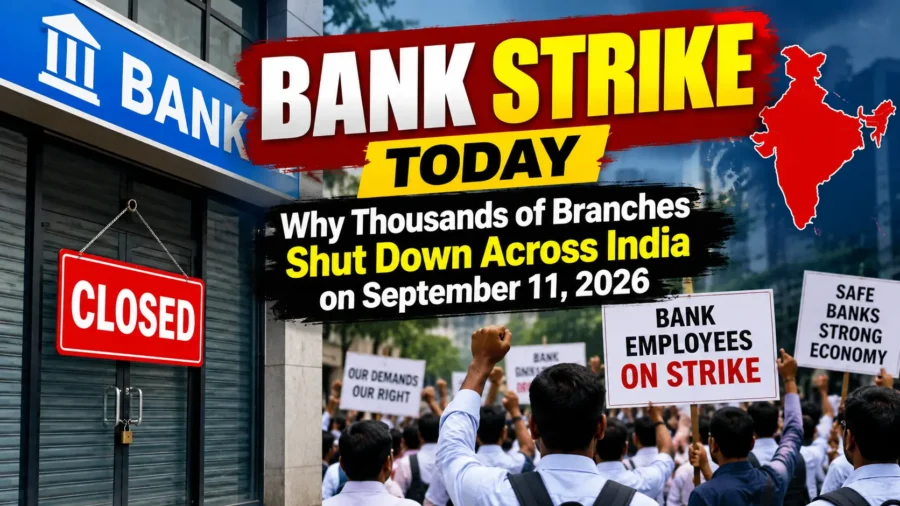

Bank strike today has brought operations at thousands of public sector bank branches to a grinding halt across India. Starting September 11, 2026, millions of customers face disrupted services as banking employees launch a nationwide protest demanding a five-day work week and rollback of the New Pension Scheme. This isn’t just another labor dispute — it’s shaping up to be one of the most significant banking disruptions the country has seen in recent years, with transactions worth over Rs 5,500 crore already affected in states like Madhya Pradesh alone.
So why are bank employees walking off the job? Look, the frustration’s been building for months. Union leaders have been locked in failed negotiations with the government and banking management, pushing for fundamental changes to working conditions that they say have been ignored for too long. And they’re not backing down — talks collapsed just days before the strike, leaving customers scrambling to figure out which services will remain available and for how long.
Also Read:-
ESDS Share Price: A Stunning 76% Premium Debut
Nifty Market Alert: What’s Behind the Recent Wild Fluctuations?
Here’s what makes this bank strike particularly disruptive: it’s hitting right in the middle of the business week, affecting everything from cash withdrawals to loan processing. The timing couldn’t be worse for businesses managing payroll cycles and individuals trying to complete urgent transactions. While digital banking channels remain operational, anyone needing branch-specific services is essentially out of luck until unions and management find common ground.
Bank Strike News: The 3 Core Demands Driving the September 2026 Protest
The bank strike in September 2026 isn’t happening in a vacuum — unions have crystallized their demands into three non-negotiable points. First and foremost? Implementation of a five-day work week. Banking employees currently work six days, and unions argue this outdated schedule doesn’t align with modern labor practices or employee wellbeing. They’ve got a point, too — most corporate sectors shifted to five-day weeks years ago.
But that’s just the opening salvo. The second major demand centers on reversing changes to the pension system. Bank employees want the New Pension Scheme (PLI) rolled back in favor of the old pension structure, which offered more predictable retirement benefits. This isn’t a small ask — it represents a fundamental shift in how banking sector retirement is structured, with significant financial implications for both employees and institutions.
The third demand involves addressing what unions call “pending issues” — a catch-all category that includes wage revisions, promotion policies, and workload distribution. These aren’t minor grievances tossed in at the last minute. They represent years of accumulated frustration over working conditions that employees say have deteriorated as banks push for increased productivity without corresponding improvements in compensation or quality of life.
Why did negotiations fail? According to union sources, management offered cosmetic concessions while refusing to budge on the core issues. Government mediators tried to broker a compromise, but the gap between what employees demanded and what management was willing to offer proved too wide. And now we’re seeing the consequences play out in real-time across thousands of branches nationwide.
Which Banks Face Disruption During the Strike Tomorrow?
Not every bank is equally affected by this strike — but if you’re a customer of major public sector banks, you’re definitely feeling the impact. State Bank of India (SBI), Punjab National Bank (PNB), Bank of Baroda (BOB), Canara Bank, Indian Bank, and UCO Bank are among the institutions experiencing the most significant disruptions. These aren’t small players — collectively, they handle millions of customer accounts and process enormous transaction volumes daily.
Private sector banks, meanwhile, continue normal operations. HDFC Bank, ICBC Bank, Axis Bank, and other private institutions aren’t participating in the strike, which creates an interesting dynamic. Customers with accounts at both public and private banks suddenly find their private accounts far more valuable during this disruption. But here’s the catch — not everyone has that luxury, and public sector banks still dominate rural and semi-urban banking in India.
| Bank Name | Strike Participation | Services Affected |
|---|---|---|
| State Bank of India (SBI) | Yes | Branch operations, cash deposits/withdrawals, cheque clearing |
| Punjab National Bank (PNB) | Yes | Counter services, loan processing, account opening |
| Bank of Baroda (BOB) | Yes | Branch transactions, demand draft issuance |
| Canara Bank | Yes | Full branch services suspended |
| Indian Bank | Yes | Cash handling, passbook updates, certifications |
| UCO Bank | Yes | All over-the-counter transactions |
| HDFC Bank (Private) | No | Normal operations continue |
| ICICI Bank (Private) | No | Normal operations continue |
Regional variations matter, too. In Madhya Pradesh, approximately 7,000 branches shut down completely, affecting business worth Rs 5,500 crore according to local union estimates. That’s just one state — multiply that impact across the country and you’re looking at economic disruption measured in tens of thousands of crores. The ripple effects extend beyond immediate banking transactions, touching everything from real estate deals requiring immediate fund transfers to businesses unable to deposit daily receipts.
What about ATMs? This is where things get complicated. While ATMs technically fall outside the strike’s direct scope, reduced cash loading and maintenance during the protest means many machines run dry faster than usual. Union representatives maintain they’re not deliberately sabotaging ATM operations, but the practical effect is similar — reduced cash availability precisely when people need alternatives to closed branches.
How This Four-Day Shutdown Affects Your Money Right Now
The immediate question on everyone’s mind: what can and can’t you do with your money during this bank strike today? Let’s break it down practically. Any transaction requiring physical presence at a branch is essentially impossible at participating banks. That means no cash deposits, no demand drafts, no account opening, and no loan disbursements that haven’t already been approved and processed.
Cheque clearings are another casualty. If you’ve deposited cheques expecting them to clear during this period, prepare for delays. The entire clearing cycle gets pushed back, which can create cascading problems for people relying on those funds for time-sensitive payments. Businesses managing cash flow particularly feel this pinch — a four-day delay in cheque clearing can mean missed payment deadlines and potential penalties.
Digital banking continues, but with caveats. Online transfers, UPI payments, mobile banking, and internet banking all function normally because these systems are automated. However — and this is crucial — any digital transaction requiring backend verification or manual intervention gets stuck in limbo. Fund transfer limits remain unchanged, but if something goes wrong with a transaction, don’t expect rapid customer service resolution during the strike.
Credit card and debit card transactions work fine for purchases and online payments. ATMs continue operating, but as mentioned earlier, cash availability becomes unpredictable. Smart customers are withdrawing necessary cash before the strike or relying more heavily on digital payment methods. This situation actually accelerates India’s digital payment adoption, albeit under less-than-ideal circumstances.
Why Bank Strike in September 2026 Marks a Critical Inflection Point
This isn’t just another labor dispute that’ll blow over in a few days. The bank strike in September 2026 represents something bigger — a fundamental conflict between traditional banking operations and modern workforce expectations. Banking employees are essentially asking: why should we work under conditions that other sectors abandoned years ago?
The five-day work week demand resonates because it’s already standard in most industries. Tech companies, corporate offices, even many government departments have made the shift. Banking employees look around and see colleagues in other fields enjoying better work-life balance while they’re still tied to six-day weeks. That comparison fuels resentment and strengthens their resolve.
But there’s another angle here that’s getting less attention: automation anxiety. As banks increasingly push digital services, branch employees worry about their long-term relevance. Demanding better working conditions now is partly about improving current quality of life, but it’s also about securing their position before further automation makes their negotiating power evaporate entirely. That’s a smart, if uncomfortable, calculation.
The pension issue cuts even deeper. The shift from defined benefit pensions to the New Pension Scheme fundamentally changes retirement security for banking employees. Under the old system, they knew exactly what they’d receive after retirement. The new system ties benefits to market performance — shifting risk from institutions to individual employees. No wonder they’re pushing back hard against this change.
Business Impact: The Rs 5,500 Crore Question
Let’s talk numbers, because the economic impact of this bank strike extends far beyond inconvenienced customers. In Madhya Pradesh alone, unions estimate Rs 5,500 crore worth of business has been affected. That’s money that isn’t changing hands, transactions that aren’t completing, economic velocity that’s dropped to zero in the banking sector.
Multiply that figure across states participating in the strike, and you’re looking at potentially hundreds of thousands of crores in economic activity either delayed or disrupted. Small businesses suffer disproportionately — they lack the sophisticated treasury management systems that large corporations use to weather such disruptions. A small manufacturer needing to clear a supplier payment today doesn’t have elaborate backup plans; they’re just stuck.
The real estate sector is particularly vulnerable. Property transactions often involve tight timelines and immediate fund transfers. A four-day banking disruption during a critical closing period can scuttle deals that took months to negotiate. Lawyers, real estate agents, and buyers all find themselves in limbo, unable to complete transactions despite everyone being ready and willing.
Agricultural payments face disruption too, though the timing could be worse. September isn’t peak harvest season across most of India, so the impact on agricultural fund flows is somewhat muted. But farmers needing credit approvals or trying to deposit recent sale proceeds still find themselves blocked. In a sector where cash flow timing is critical for planting and harvesting cycles, even short disruptions create problems.
What Customers Should Do While Branches Stay Closed
Practical advice for navigating this bank strike tomorrow: first, assess your immediate cash needs. If you haven’t already withdrawn necessary cash, do it immediately. Don’t assume ATMs near you will remain loaded throughout the strike — cash out now while you can. Keep enough on hand to cover four to five days of expenses, accounting for potential strike extensions.
Shift to digital payment methods wherever possible. UPI, mobile wallets, and card payments all continue functioning normally. If you’ve been hesitant about adopting digital payments, this strike provides strong motivation to get comfortable with these systems quickly. Download your bank’s mobile app if you haven’t already, and familiarize yourself with its functions.
For businesses: communicate with vendors and clients about potential payment delays. Don’t wait until you miss a deadline to explain the situation. Proactive communication about banking disruptions can preserve relationships that might otherwise suffer from unexplained payment delays. Consider requesting deadline extensions for any payments due during the strike period.
If you absolutely must complete a transaction requiring branch services, investigate whether private sector banks can help. Opening a quick savings account at a private bank might be worth the hassle if you’re facing a critical transaction deadline. Yes, it’s inconvenient and potentially expensive if there are account opening fees, but it might be the only option for unavoidable transactions.
Monitor strike developments closely. Union statements and news reports will provide updates on whether the strike is extending beyond the initial four-day period or if negotiations have resumed. Banking apps and websites may post service updates — check them regularly for the latest information about when normal operations might resume.
The Bigger Picture: Where Banking Labor Relations Go From Here
This bank strike today forces a larger conversation about the future of banking employment in India. As automation accelerates and digital banking becomes dominant, what role do branch employees play? And if their role is diminishing, shouldn’t working conditions improve for the time they remain relevant? These aren’t easy questions, and neither side has particularly compelling answers.
Management’s perspective emphasizes competitiveness and efficiency. They argue that maintaining six-day weeks and old pension structures makes Indian public sector banks less competitive against nimbler private competitors. There’s validity to that concern — private banks are eating market share, and operational costs matter in that competition. But is squeezing employees on working conditions really the sustainable competitive advantage they need?
Employees counter that better working conditions actually improve productivity and customer service. Burned-out staff working six-day weeks provide worse service than well-rested employees with better work-life balance. Banks save money by grinding employees down, but they lose it through higher attrition, training costs, and reduced customer satisfaction. It’s a classic short-term versus long-term tradeoff.
What’s the path forward? Probably some messy compromise that leaves nobody entirely happy. Banks might agree to five-day weeks in exchange for flexibility on pension changes or other cost-saving measures. Or government might step in with regulatory changes that force resolution. Either way, this strike has made one thing clear — the status quo isn’t sustainable, and the banking sector needs to figure out its labor relations before the next crisis hits.
Frequently Asked Questions About the Bank Strike
Is the bank strike in 2026 confirmed?
Yes, the bank strike on September 11, 2026 is absolutely confirmed and currently underway. Multiple banking unions joined together to launch this nationwide protest after negotiations with government and bank management failed to produce acceptable agreements on their core demands. The strike affects thousands of public sector bank branches across India, though private banks continue normal operations.
Will banks be open tomorrow after September 11?
The duration of the strike remains somewhat uncertain. Initially announced as a four-day action, the strike’s continuation depends on whether unions and management resume negotiations and make progress on disputed issues. Customers should monitor official bank communications and news updates for the latest information about when branches will resume normal operations. Digital banking services continue functioning regardless of the strike’s duration.
Which banking services remain available during the bank strike today?
Digital banking services continue operating normally during the strike, including internet banking, mobile banking apps, UPI payments, NEFT/RTGS transfers, and debit/credit card transactions. ATMs technically remain functional, though cash availability may diminish as the strike continues. However, any service requiring physical branch presence — including cash deposits, cheque deposits, demand draft issuance, account opening, and loan disbursements — is unavailable at participating public sector banks.
Are private banks like HDFC and ICICI affected by the strike?
No, private sector banks are not participating in this strike. Institutions like HDFC Bank, ICICI Bank, and Axis Bank continue normal operations throughout the protest period. The strike specifically targets public sector banks, where employees are demanding changes to working conditions and pension structures. Customers needing immediate branch services can use private bank branches, though they’ll need accounts at those institutions.
What are the main demands of bank employees in this strike?
Bank employees are demanding three primary changes: implementation of a five-day work week (reducing from the current six-day schedule), rollback of the New Pension Scheme in favor of the old pension structure, and resolution of various pending issues including wage revisions and promotion policies. These demands represent years of accumulated frustration over working conditions that unions argue lag behind other sectors.
How much economic activity is affected by the bank strike in September 2026?
The economic impact is substantial. In Madhya Pradesh alone, unions estimate approximately Rs 5,500 crore worth of business has been affected, with about 7,000 branches closed. Extrapolating nationwide, the total economic impact likely reaches hundreds of thousands of crores when accounting for delayed transactions, disrupted business operations, and stalled financial services across all participating states.
Can I withdraw cash from ATMs during the bank strike?
ATMs continue operating during the strike since they’re automated systems. However, reduced maintenance and cash loading during the protest means many ATMs may run out of cash faster than usual. It’s advisable to withdraw necessary cash as early as possible rather than waiting, since cash availability becomes increasingly unpredictable as the strike continues.
What should I do if I have urgent banking needs during the strike?
For urgent needs, explore digital banking options first — most transactions can be completed through mobile apps or internet banking. If you absolutely require branch services, consider using a private sector bank branch, though you’ll need an account with them. For critical deadlines that can’t be met digitally, communicate proactively with involved parties about the delay and request extensions where possible. In some cases, post offices can handle certain basic banking transactions if you have a post office savings account.