Grand Canyon flash floods turned a routine weekend hiking trip into a life-threatening ordeal for dozens of visitors at one of America’s most iconic national parks. Within just half an hour on Saturday, August 29, torrential rain triggered a wall of muddy water that tore through the inner canyon, destroying footbridges, damaging critical infrastructure and forcing a large-scale air rescue operation. Days later, search teams are still working to confirm the fate of everyone who was in the affected area, and the scale of destruction has left both officials and survivors stunned.
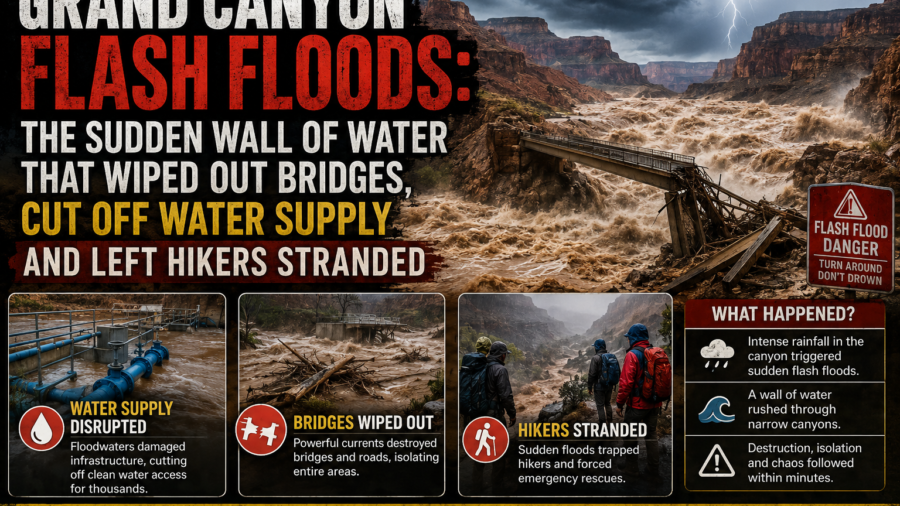
Grand Canyon flooding began around 2:30 p.m. local time in the Bright Angel Canyon area, a popular corridor for hikers heading toward Phantom Ranch, a historic lodge situated at the bottom of the canyon near the Colorado River. According to the National Weather Service, roughly half an inch to a full inch of rain fell in just about 30 minutes over a rocky stretch of terrain with a steep elevation drop — conditions that meteorologists described as unusual for that exact location. With almost nowhere for the water to soak in, most of it ran off instantly, funnelling straight into Bright Angel Creek and turning it into a raging torrent within minutes.
Bright Angel Canyon Flood: How the Disaster Unfolded
Bright Angel Canyon flood survivors described terrifying scenes as the water rose with almost no warning. Videos shared by hikers and campers showed thick, muddy water rushing beneath footbridges, sweeping away logs, debris, and even parts of structures near the creek. Witnesses recalled being told by park rangers to run toward higher ground and the nearest bridge before it was too late, with dozens of people wading through knee-deep, fast-moving water to reach safety in time.
The flooding caused what the National Park Service (NPS) called “extensive damage to infrastructure” throughout the inner canyon. Nearly all footbridges spanning Bright Angel Creek were destroyed, cutting off hiker access across the waterway entirely. Perhaps most seriously, the flood also knocked out the Transcanyon Waterline — the single pipeline that supplies water to the entire park from the canyon floor. With the waterline non-operational, the park was left with limited water reserves, prompting the NPS to enforce significant water conservation measures.
Phantom Ranch Flood: Emergency Evacuations Begin
Phantom Ranch flood conditions triggered an immediate, large-scale evacuation effort. Working alongside the Arizona Department of Public Safety, the National Park Service began airlifting stranded visitors out of the canyon almost as soon as conditions allowed. By Sunday morning, around 62 people had already been evacuated by helicopter from Phantom Ranch and the lower North Kaibab Trail, with additional evacuations from the Cottonwood Campground following soon after. Many of those rescued had lost personal belongings, tents, and supplies in the raging water and had to be flown out of a section of the park that isn’t accessible by vehicle.
Grand Canyon Death Toll and Missing Persons: The Latest Update
Grand Canyon death toll stood at two confirmed fatalities as search efforts continued into the new week. The first body was recovered from the Colorado River within the park on Sunday, and officials later confirmed that a second body — that of a 46-year-old man — was recovered near Crystal Rapids along the river the same evening. The Coconino County Medical Examiner’s Office was called to the scene, though the identities of both individuals had not been publicly released as of the latest update.
On the missing persons front, numbers shifted significantly over the following days. Officials initially estimated as many as 20 people could be missing or unaccounted for, based on the park’s permitting and reservation system. That number was revised down to around 15 by Sunday evening, and by Monday night, incident commander Dave Black confirmed that all except one individual had since been accounted for. Among those who had been reported missing earlier was a Texas chiropractor who had been documenting his Grand Canyon trip on social media; his sister told reporters they had last spoken to him on Saturday afternoon, shortly before the flooding began.
Grand Canyon Flash Flood 2026: Key Numbers at a Glance
| Detail | Figure |
|---|---|
| Date flooding began | Saturday, August 29, 2026 |
| Location | Bright Angel Canyon, Phantom Ranch area |
| Rainfall intensity | ~0.5 to 1 inch in about 30 minutes |
| People evacuated by air (Day 1) | 62+ |
| Confirmed deaths | 2 |
| Peak missing/unaccounted estimate | Up to 20 (revised to ~15, then to 1) |
| Infrastructure damaged | Nearly all footbridges on Bright Angel Creek; Transcanyon Waterline |
| People under flood watch (Aug 31) | Approx. 7 million across the Southwest |
| Park status | Both North and South Rims remain open |
(Figures reflect the most recent official updates available and may change as the search and recovery operation continues.)
Arizona Flash Flood Warning: More Rain, More Risk
Arizona flash flood alerts remained active well beyond the initial disaster, with the National Weather Service warning of continued thunderstorm activity and the possibility of further flash flooding, debris flow and rockfall through Monday. On August 31 alone, roughly 7 million people across a wide stretch of the Southwest — spanning from southern Arizona to northern Colorado — were placed under a flood watch, underlining just how widespread and unpredictable this weather system has been. The heightened risk forced rescue teams to work under pressure, racing to complete search operations before conditions could worsen again.
Colorado River Flood Impact: Boaters and Rapids Affected
Colorado River flood conditions didn’t just affect hikers on land — river rafters were also caught up in the chaos. The surge of debris-laden water swept boulders, broken infrastructure and other material directly into the Colorado River, temporarily stranding boaters navigating the area near Crystal Rapids. The disruption added another layer of complexity to an already difficult rescue and recovery operation spread across a remote and difficult-to-access stretch of the canyon.
What Has the National Park Service Done Since the Flood?
In response to the disaster, Grand Canyon National Park officials moved quickly to protect both visitor safety and the park’s strained water supply. Overnight stays and hotel accommodations within affected areas were suspended starting Monday, with only essential campground bathroom facilities kept operational. Multiple trails and campgrounds in the inner canyon remain closed until further notice, and certain Colorado River crossing points stayed shut while officials assessed the extent of the damage. Despite the disruption, park deputy superintendent Brian Drapeaux confirmed that the Grand Canyon itself remains open and accessible to visitors on both the North and South Rims.
Why This Grand Canyon Flooding Event Stands Out
What makes this particular flash flood especially significant isn’t just the death toll or the number of people rescued — it’s the scale of infrastructure damage in one of the most visited national parks in the country. Losing nearly every footbridge across Bright Angel Creek and disabling the park’s only water pipeline highlights how vulnerable even well-established tourist infrastructure can be to sudden, intense rainfall events. Experts point out that as extreme rainfall events become more frequent in parts of the American Southwest, similar flash flooding risks could become a growing concern for popular hiking destinations built around canyon and creek systems.
Conclusion
The Grand Canyon flash floods of late August 2026 have left a lasting mark on one of America’s most beloved natural landmarks — both in terms of human loss and physical destruction. While rescue crews have managed to account for nearly everyone who was reported missing, the loss of two lives and the ongoing water infrastructure crisis serve as a sobering reminder of how quickly conditions can turn dangerous in canyon terrain. As search and recovery efforts continue and repair work begins on the damaged waterline and bridges, officials are urging visitors to stay updated on official park advisories before planning any inner-canyon hikes in the coming weeks.