
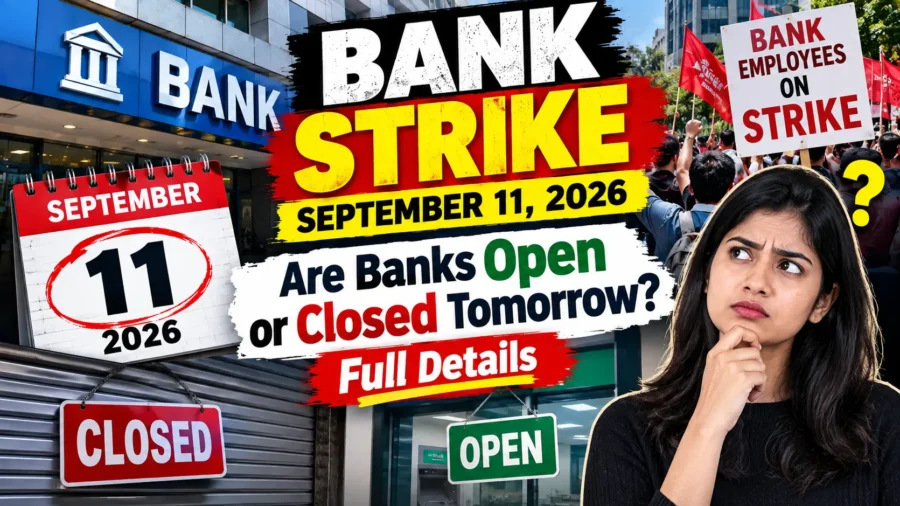

Bank strike tomorrow — those three words send a shudder down the spine of millions across India’s financial landscape. September 11, 2026. Mark it. This isn’t some routine closure you can shrug off. Bank employee unions have drawn a line in the sand, calling for a nationwide strike that demands critical reforms — a five-day work week chief among them, plus resolution of grievances that’ve been festering for months. The timing? It’s a mess. The strike lands smack in the middle of the BRICS Summit preparations and collides with a regular holiday cycle, meaning some branches could stay dark for three days straight. Maybe four, depending on where you live.
What does this mean for the things you need to do tomorrow? Withdraw cash, deposit that check you’ve been carrying around, finish up some urgent transaction you can’t put off any longer — all of it gets complicated when you hear about a bank strike tomorrow. Major public sector banks are bracing for impact. State Bank of India (SBI), Punjab National Bank (PNB), Indian Bank, UCO Bank — these aren’t small players. SBI’s already put out a customer advisory, a polite way of saying “we know this is going to hurt.” And the core issue driving this whole mess? It’s not trivial. Unions are pushing hard for better work-life balance, for the implementation of promises that were made during earlier wage negotiations but never quite materialized. This bank strike tomorrow represents more than a labor dispute — it’s a flashpoint, a collision between the relentless march of banking sector modernization and the very real, very human needs of the employees who keep the gears turning.
Also Read:-
Aja Ekadashi 2026: The Story of a King Who Lost Everything — and Got It Back for Telling the Truth
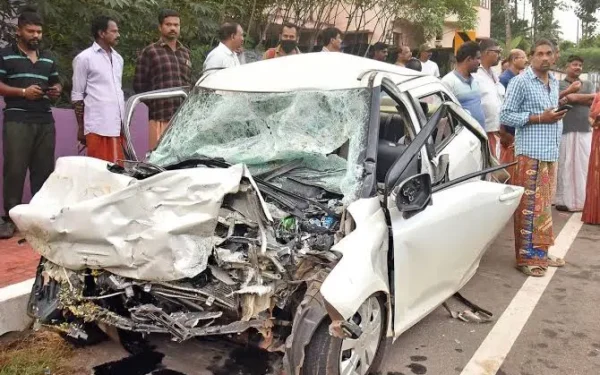
Car Tragedy in Kerala: 8 Tamil Nadu Students Killed in Horrific Crash
Unlike those spontaneous walkouts that catch everyone off guard, this action has been planned with surgical precision. Union leaders haven’t been shy about their demands. Five-day work week to bring Indian banking in line with global standards. Faster resolution of wage-related issues that’ve been stuck in bureaucratic quicksand. Better working conditions for the frontline staff who face customers day in, day out. The strike arrives after months — months — of negotiations that went nowhere. Now, you might think, “Why does a physical strike even matter anymore? We’ve got digital banking, apps, online everything.” Fair question. But here’s the thing: critical banking operations still need human beings. Loan approvals that require judgment calls. Account disputes that can’t be solved by a chatbot. Large cash deposits that trigger security protocols. Branch closures hit harder than you’d expect, even in our supposedly automated world. And that’s exactly why unions still have leverage — they know where the system’s weak points are.
The announcement of a bank strike tomorrow has become a national conversation because it creates what you might call a perfect storm of inconvenience. September 11 sits awkwardly between BRICS Summit logistics and regular weekend closures, which means some customers could be looking at banking blackouts stretching from September 11 all the way through September 14 in certain pockets of the country. That extended disruption doesn’t just annoy individual account holders — it hits businesses that depend on daily cash flow, companies trying to process salary disbursements on schedule, anyone with time-sensitive transactions that can’t just be paused for four days. The unions organizing this strike represent hundreds of thousands of bank employees scattered across India. That’s not a symbolic gesture. That’s operational teeth.
Why Bank Strike News Dominates Headlines Right Now
Media coverage kicked into high gear when SBI — India’s largest lender, the giant of the industry — formally acknowledged the strike and started urging customers to plan ahead. This wasn’t some quiet internal memo that leaked later. It was a public acknowledgment, right out in the open: normal banking services will be compromised. Other major banks followed suit like dominoes, creating this cascade of notifications across digital platforms, branch notices taped to glass doors, messages pinging on mobile apps. The story gained traction fast because it touches a nerve. Everyone uses banking services. The prospect of not being able to access your own funds, of transactions getting delayed, of being locked out even temporarily — it triggers immediate, visceral concern. News outlets have been tracking developments closely, updating which specific services will be affected, whether ATMs will function normally (mostly yes, with caveats), how digital banking platforms might compensate for branch closures (they’ll try, but it’s not a perfect substitute).
What makes this bank strike news particularly compelling, though, is the labor dispute underneath it all. Bank employees aren’t asking for marginal improvements or symbolic gestures. They’re demanding structural changes to how the entire industry operates. The five-day work week, which is standard in so many sectors globally, remains frustratingly out of reach for most bank workers who currently put in six-day weeks. Unions argue — and it’s hard to disagree — that this outdated schedule damages employee morale, reduces productivity over time, and fails to reflect what modern workforces expect from employers. Management pushes back, saying banking is customer-facing, a service that requires extended availability to meet public needs. This philosophical clash between employee rights and customer convenience forms the narrative backbone running through all the coverage. It elevates the story beyond just “branches will be closed Thursday” into something more substantial: a debate about what kind of working conditions are acceptable in 21st-century India, and who gets to decide that.
The ripple effects go further than you’d think. Small business owners who rely on same-day deposits to keep operations running smooth are scrambling. Freelancers expecting payments might see delays. Government offices that still process certain transactions with paper checks (yes, they still exist) are looking at extended timelines. Even retirees who prefer visiting branches in person rather than fumbling with mobile apps — they’re caught in the middle of this dispute, inconvenienced by a labor action that has nothing to do with them personally but everything to do with systemic issues they didn’t create. That’s why bank strike news dominates headlines right now. It’s not just about inconvenience. It’s about whose needs get prioritized — workers demanding dignity and reasonable schedules, or customers expecting uninterrupted access to services they’ve come to take for granted. Both sides have legitimate claims, which makes resolution messy and complicated.
Bank Strike in September 2026: Understanding the Full Timeline
The bank strike in September 2026 didn’t just appear out of nowhere. This is the culmination of tensions that’ve been building since earlier in the year when initial wage settlement talks stalled and then collapsed entirely. Union representatives from multiple banking federations coordinated this action with unusual discipline, settling on September 11 as the focal point for maximum impact. The date selection was strategic, not random — it deliberately overlaps with the BRICS Summit period, which amplifies visibility and cranks up pressure on both government officials and banking leadership to actually address worker demands instead of continuing to kick the can down the road. This calculated timing reflects how unions have evolved their tactics: it’s not just about walking out anymore, it’s about leveraging international attention and domestic political sensitivity to force conversations that have been avoided for too long.
Looking at the broader context, September already comes loaded with multiple bank holidays in various states thanks to regional festivals and national observances. The strike compounds this existing closure pattern, creating these extended periods where banking services become severely limited or completely unavailable. In some regions, customers might face three or even four consecutive days of banking blackouts when you factor in the strike day itself, regular weekends, and localized holidays that don’t apply everywhere but definitely apply somewhere. This ripple effect transforms what started as a single-day strike into a more substantial economic event with real implications — for business operations that depend on cash flow continuity, for payroll processing that can’t just be postponed indefinitely, for consumer access to their own funds when they need them most. Financial planners and business consultants, the ones paying attention, have been advising clients since early September to front-load transactions and maintain higher cash reserves as a precautionary measure. That advice looks pretty smart right about now.
The bank strike in September 2026 also raises some uncomfortable questions about the future of labor actions in an increasingly digital financial landscape. While online banking, mobile apps, ATM networks — all of these theoretically reduce our dependence on physical branches, the reality is way more nuanced than that. Complex transactions still need human intervention. Loan approvals that require document review and judgment. Account opening with identity verification. Dispute resolution when something goes wrong and you need a real person to actually listen and fix it. Large cash deposits that trigger security protocols. Many rural and semi-urban customers lack the digital literacy or reliable internet access that would make branch services replaceable. Unions leverage this reality brilliantly, understanding that even partial participation in strikes creates disproportionate disruption across the system. The September 2026 action might serve as a blueprint for future labor strategies in the banking sector, where symbolic one-day strikes are carefully timed to maximize inconvenience and, consequently, negotiating leverage.
Services Disrupted: What You Can’t Do During the Strike
When bank strike tomorrow becomes bank strike today — when the calendar flips and it’s actually September 11 — the practical impacts hit like a wall. Branch counters will operate with skeleton staff, if they operate at all. Depends on strike participation rates at individual locations, which vary based on local union strength and employee commitment to the cause. This means routine transactions like cash withdrawals and deposits at teller windows become impossible at participating branches. Not difficult. Impossible. Check processing will slow dramatically or halt altogether for the duration, causing delays in fund clearances that extend well beyond the actual strike day because of backlog accumulation. If you were planning to open a new account on September 11, apply for a loan, or sit down with someone for financial advice — those plans need immediate rescheduling. It’s not happening.
Now, crucially, not every banking function grinds to a complete halt. ATM networks should function normally, though cash replenishment might lag if strike participation includes the logistics staff responsible for filling machines. Digital banking platforms — your mobile apps, internet banking portals, the whole digital ecosystem — should remain operational since these systems run on automated infrastructure requiring minimal human intervention. UPI payments, NEFT, RTGS, IMPS transactions processed through digital channels will likely continue, though some banks have cautioned about potential delays in processing times because of reduced backend support staff who handle exceptions and troubleshoot problems when they arise. The disconnect between digital and physical banking becomes starkly, almost comically visible during strikes: you can transfer money electronically from your phone without a hitch, but you can’t walk into a branch to resolve a disputed transaction that’s been hanging over your head for weeks. That’s the weird reality we live in now.
The disruption radiates outward beyond individual customers. Businesses relying on same-day cash deposits to maintain liquidity face genuine challenges — not theoretical ones, real cash flow problems. Companies processing payroll on September 11 might encounter delays if they depend on manual bank interventions for bulk transfers that don’t go through automatically. Government offices and institutions that still use check-based payments for certain types of transactions will see processing timelines stretch out like taffy. Even automated clearing house (ACH) operations could face slowdowns if technical issues pop up and there’s not full staffing available to address them quickly. The cumulative economic impact of a one-day strike, when you measure it across millions of transactions and thousands of businesses all trying to operate normally, runs into substantial figures — real money, real economic friction. That reality gives unions meaningful leverage, but it also raises public frustration to levels that make politicians nervous and create pressure for quick resolution. Everyone loses something when the banking system seizes up, even partially.
Bank Strike Today: Immediate Customer Impact and Mitigation Strategies
| Service Category | Availability During Strike | Recommended Action |
|---|---|---|
| Branch Counter Services | Severely Limited/Closed | Plan transactions before or after September 11 |
| ATM Withdrawals | Generally Operational | Withdraw sufficient cash on September 10 |
| Digital Banking (UPI/NEFT/RTGS) | Operational with Possible Delays | Use digital channels; allow extra processing time |
| Check Deposits/Clearances | Suspended | Deposit checks before September 10 or after September 12 |
| Loan Applications/Account Opening | Not Available | Reschedule appointments; use online application portals |
| Customer Service Helplines | Reduced Capacity | Expect longer wait times; use chatbots where available |
For customers waking up to the stark reality of bank strike today — not tomorrow anymore, not some abstract future problem, but right now, this morning — the immediate priority is simple: assess which planned transactions are genuinely urgent versus which can be postponed without serious consequences. If you absolutely, positively need cash in hand, hitting an ATM early in the day on September 11 is advisable before machines potentially run low on currency due to reduced refilling operations. For bill payments and transfers, digital platforms remain your best bet, though you should initiate those transactions with extra lead time built in to account for potential processing delays that might occur when backend support is stretched thin. Businesses should communicate proactively with vendors and employees about possible payment timing shifts, setting realistic expectations to avoid the downstream disruptions that happen when everyone’s caught off guard.
Smart customers — the ones who were paying attention to the warnings — anticipated this strike by front-loading transactions in the days leading up to September 11. Cash withdrawals completed by September 9 or 10. Check deposits done early. Document submissions for loan applications or account services pushed through before the strike window opened. This proactive approach minimizes inconvenience, but it requires awareness — which underscores the genuine importance of following bank strike news closely instead of assuming it won’t affect you personally. For those who didn’t plan ahead (and let’s be honest, that’s most people), the fallback strategy is embracing digital alternatives wherever they’re available. Most banks have upgraded their digital infrastructure pretty substantially in recent years, meaning many traditional branch transactions now have online equivalents that work reasonably well if you’re willing to navigate the interfaces. The strike, in this peculiar way, forces customers to adopt digital banking habits they might have otherwise resisted or postponed indefinitely, potentially accelerating the broader digitization trend the industry’s been pursuing for years anyway.
The psychological dimension shouldn’t be underestimated or dismissed as irrational. Even if you don’t have urgent banking needs on September 11 — even if your finances are perfectly in order and you don’t need to do a single transaction — the knowledge that access is restricted creates this subtle but real anxiety about financial control. You don’t like feeling cut off from your money, even temporarily. That emotional response, which isn’t entirely logical but is completely human, explains why bank strikes generate such disproportionate media coverage and public conversation relative to their actual economic impact when you try to quantify it objectively. People react viscerally to the idea that they can’t get their hands on their own funds when they want them. Banks and unions both understand this dynamic intimately, which is why strikes remain an effective negotiating tool despite all the automation and technological progress. The human element — both in terms of employee grievances that can’t be resolved by algorithms, and customer reactions that go beyond pure rationality — still dominates the banking experience in ways that technology hasn’t fully replaced and probably never will.
Beyond September 11: Long-Term Implications for India’s Banking Sector
This bank strike tomorrow (or today, depending when you’re reading this) signals way deeper structural tensions within India’s financial services industry than just a dispute over schedules and wages. The five-day work week demand isn’t merely about employee convenience or giving people an extra day off to relax. It reflects broader, more serious questions about productivity patterns, work-life balance in demanding customer-service roles, and competitive hiring in a sector that’s facing genuine talent retention challenges. Younger employees — particularly those with in-demand technical skills in data analytics, cybersecurity, digital product development — increasingly reject traditional six-day schedules in favor of employers offering better flexibility and modern work arrangements. If public sector banks don’t adapt to these changing workforce expectations, they risk losing their best talent to private sector competitors and fintech companies that already operate on work schedules that don’t feel like they’re stuck in 1985. The strike forces these uncomfortable conversations into the open, dragging them out of committee rooms and internal memos into public debate where they can’t be ignored or postponed indefinitely. That might accelerate reforms that would have otherwise languished for years in bureaucratic limbo.
From a customer perspective — and this is where it gets interesting — the repeated disruptions caused by labor actions might actually accelerate the shift toward fully digital banking relationships faster than any marketing campaign or app redesign ever could. Every strike reinforces the same lesson: relying solely on physical branches creates vulnerability. You’re at the mercy of labor disputes, holiday schedules, staffing decisions, all these variables beyond your control. This realization could ironically work against union interests in the long term. If strikes push customers permanently toward digital channels and self-service options, the human workforce becomes less essential to daily operations, which weakens labor’s negotiating position over time. It’s this delicate, almost paradoxical balancing act: unions need to demonstrate their relevance and power through strikes and the credible threat of strikes, but overuse of this tactic might actually hasten the automation and digitization they fear will eliminate jobs. Forward-thinking union leadership recognizes this paradox and tries to frame their demands differently — not as resistance to change or progress, but as ensuring that technological transitions don’t happen at the expense of worker welfare, that the benefits of productivity gains get shared rather than just flowing to shareholders and executives.
The regulatory and political dimensions deserve attention too because they’re where the real decisions ultimately get made. Government officials, who have enormous influence over public sector bank policies even if they don’t control them directly, face pressure from multiple directions that pull them in opposite ways. Customer complaints about service disruptions create political headaches, especially when extended closures affect rural populations who depend heavily on branch access and can’t just switch to mobile banking because internet connectivity is unreliable or nonexistent. Simultaneously, labor unions represent massive voting blocs that politicians absolutely cannot simply ignore or antagonize without electoral consequences. This creates an almost impossible push-pull dynamic where policymakers try to find compromise solutions that satisfy nobody completely but avoid catastrophic political fallout. Perhaps gradual implementation of five-day weeks in select branches as a pilot program. Maybe phased rollouts based on geography or bank size. Testing new work arrangements in urban areas before expanding to semi-urban and rural branches. The September 2026 strike might be remembered not for the immediate disruption it caused, but as a catalyst moment that forced substantive policy discussions rather than continued avoidance of difficult decisions everyone knew were coming eventually. Whether those discussions yield meaningful, lasting change or merely temporary appeasement that kicks the problem down the road for the next government to handle — well, that remains to be seen. But the conversation itself represents progress from years of stagnation on labor reform in the banking sector, where issues festered precisely because they were too politically sensitive to address head-on.
Frequently Asked Questions About the September 11 Bank Strike
Which Banks Are Participating in the Strike on September 11, 2026?
The strike primarily affects public sector banks where union membership runs strongest and has the deepest organizational roots. Confirmed participants include State Bank of India (SBI), Punjab National Bank (PNB), Bank of Baroda, Indian Bank, UCO Bank, Canara Bank, and Union Bank of India — essentially the major public sector institutions that employ the bulk of unionized banking workers. Private sector banks like HDFC Bank, ICICI Bank, and Axis Bank are generally not participating, as their employee unions operate under different negotiation frameworks and haven’t coordinated strike activity with the public sector federations. However, even at participating banks, branch-level impact varies considerably based on local union participation rates and employee commitment. Some branches might operate with reduced staff handling only emergency transactions, while others close their doors entirely for the day.
Will ATMs Work During the Bank Strike Tomorrow?
ATMs should remain operational during the strike since they run on automated systems requiring minimal human intervention for basic withdrawal and balance inquiry functions. That’s the good news. However, cash replenishment might get delayed if logistics and security staff participate in the strike action, which could potentially lead to some machines running out of currency by late afternoon on September 11 or by September 12 in high-traffic locations. Banks have advised customers — and this is smart advice — to withdraw whatever cash they’ll need on September 10 as a precautionary measure, just to avoid the possibility of encountering empty ATMs. If an ATM malfunctions during the strike, technical support response times might be slower than you’d normally expect because of reduced staffing levels. So yes, ATMs work, but with asterisks attached.
Can I Use Digital Banking During the Strike?
Yes, digital banking services including mobile apps, internet banking portals, UPI payments, NEFT, RTGS, and IMPS should all continue functioning without major interruptions. These platforms operate on automated infrastructure that doesn’t require the same level of continuous human intervention as branch services do. That said, some banks have issued cautionary statements that backend processing might experience slight delays if technical issues arise and there’s not full IT support staff available to troubleshoot quickly. For routine transactions like bill payments, fund transfers between accounts, checking balances, downloading statements — digital channels remain your best and most reliable option during the strike period. Just maybe allow a bit more time than usual for transactions to process completely, and don’t assume that customer service chat support will be as responsive as normal.
Are Banks Closed for Three Consecutive Days Starting September 11?
In some regions, yes — banks could be inaccessible for three or even four consecutive days. The strike on September 11 coincides awkwardly with the BRICS Summit and falls adjacent to weekend closures, creating these extended banking blackout periods in certain areas. The specific closure pattern depends entirely on your location and the local holiday calendar that applies where you live or do business. Some states observe regional festivals during this same period, which adds additional closure days on top of the strike and regular weekend. Customers should check — actually look it up, don’t just assume — their specific bank’s holiday calendar and strike notifications to understand the exact closure duration for their local branch. What’s true in Mumbai might be completely different from what’s happening in Kolkata or Chennai.
Why Are Bank Unions Striking in September 2026?
The primary demand driving this strike is implementation of a five-day work week, which would bring Indian banking in line with global standards and improve employee work-life balance to something approaching modern norms. But it’s not just about schedules. Unions also cite unresolved wage negotiations where agreements were supposedly reached but then not properly implemented, demands for better working conditions in branches that are understaffed and overworked, and concerns about staffing levels as banks aggressively digitize operations without clear plans for affected employees. The strike represents accumulated frustration over promises made during earlier negotiations that unions claim haven’t been adequately fulfilled — or in some cases, haven’t been fulfilled at all. September 11 was chosen strategically to maximize visibility during the BRICS Summit period when international media attention on India peaks, creating pressure on both bank management and government officials to actually address these issues rather than continuing to delay.
Will Salary Credits and Automatic Payments Be Affected?
Salary credits processed through automated systems like NECS (National Electronic Clearing Service) should generally proceed on schedule since these are electronic bulk transfers that don’t require manual intervention. However — and this is important — companies that manually initiate salary payments through branch visits or paper-based processes might face delays. Automatic bill payments, EMI debits, and standing instructions typically continue running since they’re system-generated and execute based on pre-programmed instructions. If you’re expecting a salary credit on September 11, it’ll likely arrive on time unless your employer uses manual processing methods that depend on branch access. To be safe, maintain sufficient account balance for automatic debits scheduled around the strike date, just so you don’t get hit with failed payment fees or penalties because something didn’t process as expected.
How Should Businesses Prepare for the Banking Strike?
Businesses should complete cash deposits by September 10 at the absolute latest, ensure sufficient working capital reserves to cover operations through potential multi-day banking unavailability, communicate proactively with vendors and employees about possible payment delays so nobody’s caught off guard, and shift time-sensitive transactions to digital channels wherever feasible. Companies relying on same-day check clearing need to adjust their cash flow planning accordingly — assume checks deposited on September 11 won’t clear until September 12 or 13 at earliest. Payroll departments should either process salary transfers a day early if possible, or clearly communicate potential delays to employees before anxiety and complaints start flooding HR. Businesses with receivables should follow up with customers before September 11 to politely but firmly ensure payments are initiated ahead of the strike window, avoiding the awkward situation where “the payment’s stuck because of the strike” becomes an excuse for late payment.
Is This Part of a Larger Pattern of Bank Strikes in 2026?
Yes, absolutely — the September 11 strike follows earlier labor actions throughout 2026 as bank unions systematically push for structural reforms that keep getting postponed or watered down in negotiations. While not every strike call materializes into full-scale action (sometimes the threat alone produces movement in negotiations), the frequency of strike threats has definitely increased as talks over the five-day work week and wage settlements have repeatedly stalled. Industry observers who follow labor relations closely expect continued periodic strikes, or at minimum the credible threat of strikes, until a genuinely comprehensive settlement gets reached between union federations and the Indian Banks’ Association that addresses core issues rather than just papering over symptoms. The pattern reflects broader labor unrest in the public sector banking system as it undergoes significant technological and operational transformation without clear consensus on how to manage the human impact of those changes fairly.



1 Comment