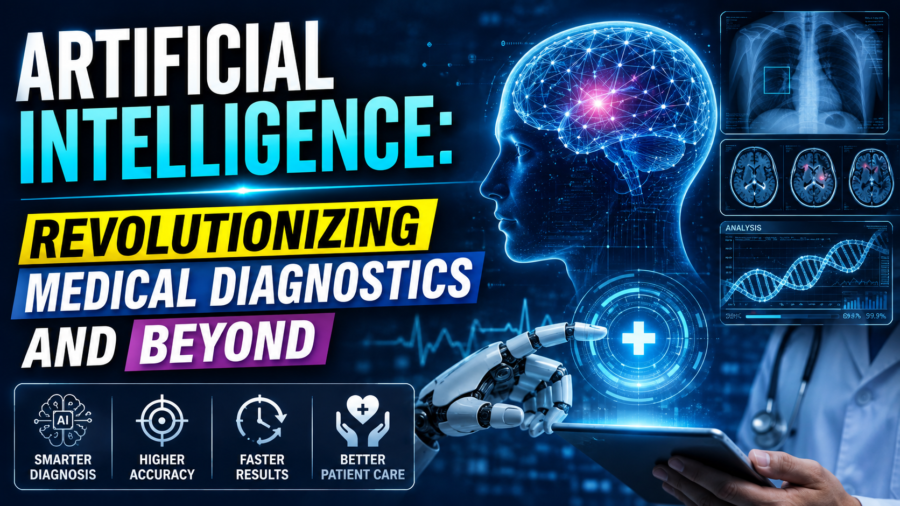
Artificial Intelligence is really shaking things up in medical diagnostics these days, all thanks to a fresh AI model that’s making waves with its incredible reasoning skills. This isn’t just a tech upgrade—it’s revolutionizing how we figure out and tackle complex health issues.
AI Developments: Reshaping the Healthcare Landscape
AI developments aren’t merely about tinkering with what’s already there. They’re about totally reinventing medical diagnostics. This new AI model, which has been making headlines in numerous Artificial Intelligence news outlets, is analyzing medical data at a speed and with a precision that’s simply unheard of. This is huge. Think about it: doctors can now diagnose diseases way faster and more accurately than before, which means more lives saved. Seconds count.
Also Read:-
ChatGPT Astra: Transforming AI Technology with OpenAI’s Latest Breakthrough
5 Nano Banana Tricks: Gemini Google Photo Magic
When we bring AI into healthcare, it’s more than just a tech boost; it’s a giant step towards personalized medicine, really. AI’s got the power to sift through enormous datasets and find patterns that even the most experienced docs might miss. Imagine an assistant who’s always in top form and just gets better over time. That’s AI for you.
And it doesn’t end with diagnostics. AI is also changing how treatments and patient management work. It’s making healthcare more proactive, not just reactive, which is super crucial when you’re dealing with chronic conditions. This way, we can catch things early and improve how patients do over the long haul.
AI Tools: Revolutionizing Patient Care
AI tools are becoming must-haves in the medical field. They’re not just fancy gadgets. From analytics that predict outcomes to treatment plans that fit like a glove, AI tools are enhancing patient care every step of the way. This new AI model is a prime example of how far we’ve come, shedding light on things that seemed out of reach before.
These tools are making healthcare more equal, too, by bringing top-notch diagnostic abilities to far-off and ignored places. Picture this: a small-town clinic in Africa using the same diagnostic tools as a leading hospital in the Big Apple. That’s the kind of future AI tools are paving the way for.
In the realm of medical research, AI is a pivotal force. It’s helping with drug discovery by mimicking complex biological systems, which could seriously slash the time and cash needed for new meds to hit the shelf. This potential is a big deal for pharma companies and patients anxiously waiting for new cures.
Artificial Intelligence Stocks: Investing in Innovation
With AI capabilities skyrocketing, it’s no surprise Artificial Intelligence stocks are seeing a boom. Investors are glued to the ways these techs are turning industries on their heads—and healthcare’s no exception. Companies leading the charge in AI developments within the healthcare sector are seeing their stock values soar.
The lure of AI in healthcare for investors is all about its knack for shaking up the old ways and opening doors to new markets. As Artificial Intelligence keeps growing, those who’ve jumped on the bandwagon early might just reap the greatest rewards.
Backing AI stocks isn’t just about jumping on a trend; it’s a bet on what’s to come. With AI poised to revolutionize sectors like finance, manufacturing, and education, it’s a tempting choice for investors with an eye for the future.
Artificial Intelligence News: Shaping the Future
Lately, Artificial Intelligence news has been buzzing about this new AI model that promises to change the game in medical diagnostics. This isn’t just about pushing tech boundaries; it’s a testament to how clever we can be at using AI to tackle tough problems. What’s next in line?
As AI becomes even more embedded in healthcare, we’ve got to think about the ethics involved, right? Protecting patient privacy and dealing with possible biases in AI systems are major issues. The ongoing conversation about AI has to cover these bases to make sure the tech is there to help us out, not cause harm.
The news is also showcasing AI’s role in global health efforts. By offering scalable solutions to health challenges in the developing world, AI’s making a noticeable dent in global health outcomes, showing its potential to close the gap in healthcare access.
AI in Healthcare: Improving Patient Outcomes
AI in healthcare isn’t just a trendy topic; it’s actively enhancing patient outcomes as we speak. By enabling earlier and more precise diagnoses, AI tailors treatments to suit each patient’s unique needs, which leads to better recovery rates and a higher quality of life. Sounds like a win, right?
The future of AI in healthcare is promising, with possible uses stretching from robotic surgeries to AI-driven mental health treatments. As these techs grow more refined, the true scope of Artificial Intelligence’s impact on healthcare will become clearer, holding the promise of a healthier tomorrow.
AI is also helping out with the behind-the-scenes stuff. By automating everyday tasks like scheduling and billing, AI frees up healthcare workers to spend more time on actual patient care, boosting the whole healthcare experience in the process.
AI’s Broader Impact Beyond Healthcare
Sure, healthcare’s a big piece of the puzzle, but AI’s reach stretches across various sectors. In finance, it’s fine-tuning trading strategies and catching fraud before it happens. In manufacturing, AI boosts productivity through predictive maintenance and quality checks. It’s transforming industries by automating tasks and offering deeper insights.
When it comes to education, AI’s impact can’t be overlooked. It’s offering personalized learning experiences that adjust to each student’s needs, potentially flipping traditional education models on their head. This approach could lead to more engaging and effective learning experiences, preparing students for a future where Artificial Intelligence is central.
And then, there’s AI in transportation, pushing the envelope on autonomous vehicles—which could mean safer and more efficient travel. These innovations highlight AI’s potential to change everyday life, marking it as a powerhouse in modern society.
Ethical Considerations in AI Development
As AI keeps evolving, sorting out the ethical concerns needs top priority. Questions about data privacy, algorithmic bias, and potential job losses demand attention. Developers and policymakers must team up to create guidelines ensuring AI is a boon for society as a whole.
Understanding how AI decides things—especially in critical areas like healthcare and finance—is crucial. Ensuring AI systems operate on fair and unbiased grounds will foster public trust and encourage broader acceptance.
But it doesn’t stop there. Ethical AI development calls for ongoing vigilance and flexibility. As AI learns and grows, so too must the guidelines steering it, ensuring these technologies remain aligned with human values and societal goals.
| Aspect | Details |
|---|---|
| New AI Model | Unprecedented reasoning capabilities in medical diagnostics |
| Impact on Healthcare | Improved diagnostic accuracy and speed |
| Investor Interest | Increased interest in AI stocks |
FAQs
What is artificial intelligence?
Artificial intelligence refers to the simulation of human intelligence in machines that are programmed to think and learn like humans. It encompasses a range of technologies, including machine learning and natural language processing.
What 5 jobs will AI not replace?
AI is unlikely to replace jobs that require emotional intelligence, creativity, complex problem-solving, strategic thinking, and human touch, such as therapists, artists, senior executives, teachers, and caregivers.
Who is the father of AI?
John McCarthy, a computer scientist, is often referred to as the father of AI for his pioneering work in the field.
Is AI a good career?
Pursuing a career in AI can be highly rewarding due to the growing demand for AI professionals and the wide range of applications across various industries.
How does AI improve healthcare?
AI improves healthcare by enabling faster and more accurate diagnoses, personalizing treatment plans, and making advanced healthcare accessible to remote areas.
What are the ethical concerns with AI?
Ethical concerns with AI include data privacy, algorithmic bias, and potential job displacement. Transparency and fairness in AI systems are crucial to addressing these issues.
How is AI used in education?
AI is used in education to create personalized learning experiences, adapting to students’ needs and providing more engaging and effective learning opportunities.